What Does Vanity Mean in the Bible? A Memory Method
Understanding this meaning helps explain why the Bible warns against building a life around things that cannot provide real, lasting purpose.
Posted by
 Eden
EdenRelated reading
Are Dinosaurs Mentioned in the Bible? A Retention Guide
The Bible does not explain how these creatures came to an end.
How Did Samuel Die in the Bible? Memory Science Guide
Samuel was buried at his own house in Ramah, the town connected to most of his life and work, according to the account of his death and burial in 1 Samuel 25.
How Did Saul Die in the Bible? Scripture Memory Method
The death of King Saul marks the end of Israel's first monarchy in the Old Testament.
TL;DR
- In the Bible, vanity means something empty, temporary, or without lasting value, not pride or self-admiration as the word is used today.
- The Hebrew word often translated as "vanity" is hebel, which literally means vapor or breath, pointing to things that fade quickly.
- The biblical definition of vanity centers on spiritual emptiness: chasing wealth, status, or pleasure without connecting to God's purpose leaves a person unfulfilled.
- Ecclesiastes uses "vanity" repeatedly to show that human effort and achievement, when separated from God, amount to nothing lasting.
- Understanding this meaning helps explain why the Bible warns against building a life around things that cannot provide real, lasting purpose.
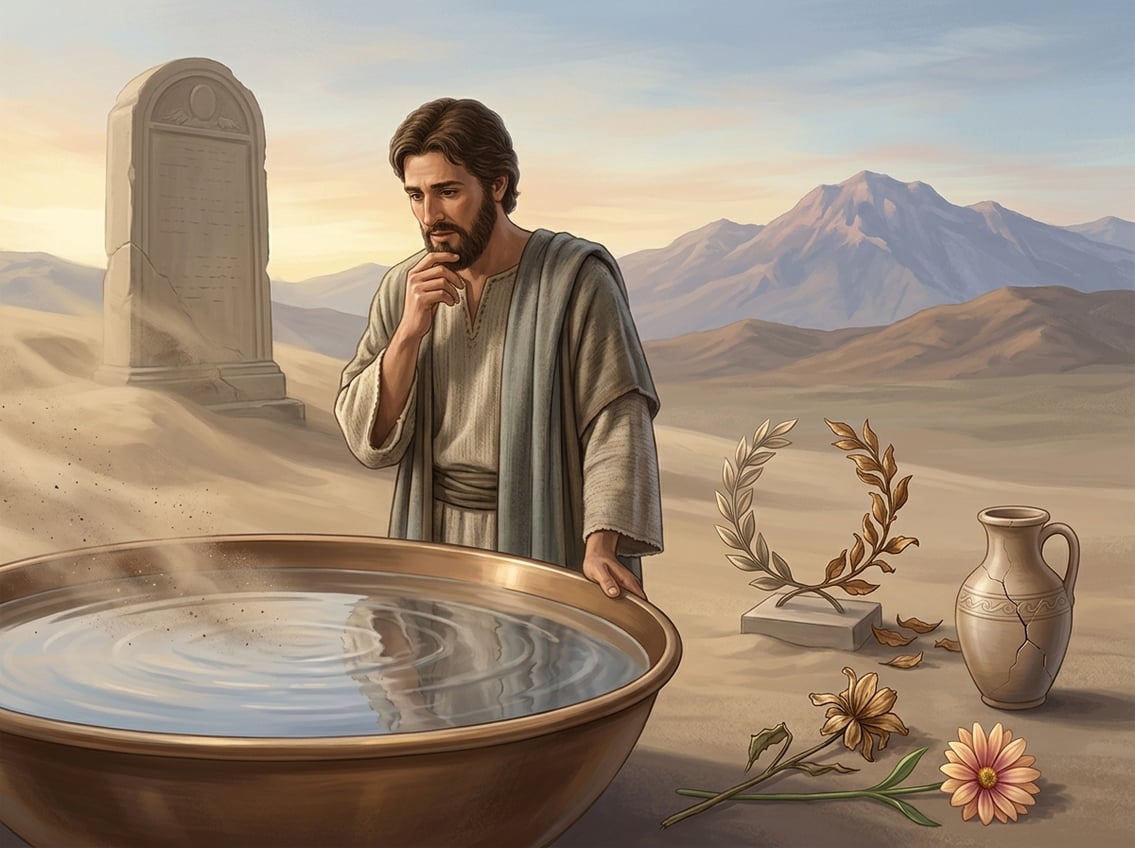
Vanity's Biblical Sense: Vapor, Futility, and Pride
The Bible uses vanity to describe two related ideas: the temporary nature of life and the danger of excessive pride. These meanings come from a Hebrew word that pictures something people cannot hold onto.
The Hebrew Picture of Hevel as Breath and Mist
The Hebrew word behind biblical vanity is hevel, which literally means vapor or breath. This word shows up over and over in Ecclesiastes.
What hevel pictures:
| Image | What It Represents |
|---|---|
| Vapor | Something seen briefly, then gone |
| Mist | Fog that fades once the sun rises |
| Breath | Air exhaled, invisible right away |
| Wind | Movement felt but never grasped |
Solomon uses this word to describe life without God. He says chasing wealth, work, or pleasure is like trying to hold onto vapor or mist. No matter how hard someone tries, it slips away.
This is why English Bibles often translate hevel as meaningless, futility, or emptiness.
How Emptiness and Excessive Pride Relate
Biblical vanity connects futility with pride. Both point to the same problem: people trusting the wrong thing.
Two sides of biblical vanity:
- Emptiness/futility – chasing things that don't last (wealth, status, pleasure)
- Excessive pride – trusting the self instead of God
Pride enters when a person believes their own strength, beauty, or success makes them important. Vanity often shows up as an overestimation of one's own worth, which leads people to ignore God and others.
Example: King Saul
- Given gifts and a high position by God
- Let pride take over his choices
- Result: loss of God's blessing and years of conflict
This pattern still applies today. When self takes the highest place, biblical wisdom warns that pride and emptiness follow close behind.
Ecclesiastes and the Limits of Earthly Pursuits
The Book of Ecclesiastes gives the clearest picture of vanity in the Bible. King Solomon, known as the Preacher, tests wisdom, pleasure, work, and wealth, and finds none of them can deliver lasting satisfaction on their own.
“Vanity of Vanities” in Ecclesiastes 1:2
Ecclesiastes 1:2 opens the book with a direct statement: "Vanity of vanities, saith the Preacher, vanity of vanities; all is vanity" (KJV).
| Translation | Rendering of Ecclesiastes 1:2 |
|---|---|
| KJV | "Vanity of vanities...all is vanity" |
| NIV | "Meaningless! Meaningless!...Utterly meaningless!" |
| NLT | "Everything is meaningless" |
| NET | "Futile! Futile!...Absolutely futile!" |
The Hebrew word behind "vanity" is hevel. It literally means breath or vapor.
This word choice matters. Hevel points to something that is fleeting or hard to grasp, not something that is worthless or fake. Solomon repeats the phrase to stress how quickly earthly things pass.
Solomon's Search Through Wisdom, Pleasure, Work, and Wealth
Solomon tests four major areas of life to see if they produce lasting meaning:
- Wisdom – He gained more knowledge than anyone before him, yet found that wisdom alone could not answer life's deepest questions.
- Pleasure – He tried laughter, wine, and entertainment. The result still fell short of true satisfaction.
- Work – He built houses, planted vineyards, and completed great projects. Ecclesiastes 2:22-23 notes that his labor brought pain and grief, with no rest even at night.
- Wealth – He collected silver, gold, and possessions beyond any king before him. Money and riches did not fill the gap he was searching to close.
Each pursuit is described using the same word: hevel. Solomon's own life became the test case for whether human achievement, on its own, can deliver ultimate meaning.
Why "All Is Vanity" Does Not Mean Life Has No Purpose
"All is vanity" does not mean life has no purpose. It means life apart from God, focused only on things "under the sun," cannot supply lasting purpose.
Key distinction:
| Statement | What It Means |
|---|---|
| "All is vanity" | Earthly pursuits alone cannot deliver lasting satisfaction |
| Not the same as | Life has no meaning or value at all |
Ecclesiastes 12:13-14 gives the book's conclusion: fear God and keep his commandments. This is presented as the whole duty of man.
The book frames worldly success as limited, not empty. Wisdom, pleasure, work, and wealth still have value. They simply cannot serve as the final source of meaning. Solomon's conclusion places lasting purpose in a relationship with God rather than in achievement or possessions alone.
Vanity Across the Old and New Testaments
The Bible uses the idea of vanity to describe things that look important but do not last. This theme runs through poetry, history, and letters, showing up in different forms across both testaments.
Human Brevity in Psalms, Proverbs, and Job
The Old Testament often compares human life to a breath or vapor.
- Psalm 39:5 – David says his life is "as nothing" before God, comparing it to a breath.
- Job – Job describes his days as swift and empty, passing like a shadow.
- Proverbs 31:30 – This verse states that beauty is fleeting and charm can be deceptive.
| Book | Reference | Main Point |
|---|---|---|
| Psalms | Psalm 39:5 | Human life is short, like a breath |
| Job | Job 7:16 | Days pass quickly and have little weight |
| Proverbs | Proverbs 31:30 | Physical beauty fades and can mislead |
These passages do not say life has no value. They warn against placing full trust in things that do not last, a point explored in detail in this breakdown of vanity's meaning in scripture.
Idolatry and False Worship in Israel’s Story
The Old Testament often links vanity to idol worship. Nations across the ancient Near East built statues and images, calling them gods.
Scripture calls these objects "vanities" because they cannot act, speak, or save. The contrast is always drawn between lifeless idols and the living God, who acts in history and hears prayer.
This theme connects back to Eve in Genesis, where believing a lie about gaining wisdom outside of God's word led to sin. That same pattern—trusting something empty instead of God—repeats through Israel's history, as explained in this look at vanity and spiritual downfall and this explanation of vanity's meaning and significance.
Paul, Jesus, and Creation’s Subjection to Futility
The New Testament uses a Greek word, mataiotes, to carry forward the Old Testament idea of emptiness.
- Romans 8:20 – Paul writes that creation was subjected to futility, not by its own choice, but through God's plan, with hope of future restoration.
- Acts 14:15 – Paul tells a crowd to turn from "vain things" like idol worship, toward the living God.
Jesus also addressed a related idea when he confronted the Pharisees. He criticized their focus on appearing righteous while ignoring the value of extending mercy, warning against empty religious display, a concept tied to the biblical view outlined in this [summary of the Bible's perspective on van
The Modern Forms of Empty Pursuit
Modern life offers many ways to chase things that do not last. Status, money, and self-image often replace a person's true identity, which the Bible says is found in a relationship with God.
When Status, Fame, and Appearance Shape Identity
Many people build their identity around status, fame, or beauty. These things can change fast and never fully satisfy.
Common patterns:
| Pursuit | What People Chase | Bible Warning |
|---|---|---|
| Status | Social rank, likes, followers | Pride leads to a fall |
| Fame | Public praise, attention | Fame fades; only God's approval lasts |
| Beauty | Physical appearance, image | Outward beauty is temporary |
King Saul in 1 Samuel is a clear example. He started as a humble leader but let pride and jealousy of David's growing fame corrupt his choices.
His story shows how focusing on self and public image can lead someone away from God's plan.
When Work, Money, and Possessions Become Ultimate
Work, wealth, and material possessions often become the main goal in a person's life. The Bible calls this pattern empty when it replaces trust in God.
Signs work or wealth has become an idol:
- Working long hours just to gain more riches
- Measuring self-worth by income or job title
- Believing more possessions will bring lasting peace
- Feeling anxious when wealth or achievements are threatened
Ecclesiastes describes this cycle directly. It states that chasing wealth and achievements is like chasing wind—it never truly satisfies.
Worldly success can bring short-term comfort, but it cannot fill a spiritual need. That need can only be met through identity in Christ.
The Warning Signs of Self-Centered Ambition
Self-centered ambition often starts small before it grows into full spiritual emptiness. Below are common warning signs.
Checklist of warning signs:
- Constant comparison to others (jealousy)
- Making choices based on pride, not truth
- Valuing self-image over honesty
- Ignoring God's guidance to protect reputation
- Feeling empty despite outward success
These signs match what Scripture describes as vanity—something that looks valuable but is fleeting.
The goal is not to avoid ambition, but to recognize when self replaces God as the center of life.
Living for What Has Eternal Value
Scripture points to a life built on things that last, not things that fade. The verses below show what that looks like in practice.
Fearing God and Keeping His Commandments
Key verse: Ecclesiastes 12:13 — "Fear God, and keep his commandments: for this is the whole duty of man."
| Concept | Meaning |
|---|---|
| Fear God | Respect God's authority above human opinion |
| Keep His commandments | Obey God's instructions as daily practice |
| Whole duty of man | The summary goal of a meaningful life |
This verse answers the question raised earlier in Ecclesiastes: if life is fleeting, what should a person do?
The Preacher's answer is direct. Fear God and obey Him.
Cross-reference: James 4:14 reminds readers that life is "a vapor, that appeareth for a little time." This shortness of life is the reason to focus on obedience now, not later.
Storing Treasures in Heaven Rather Than on Earth
Key passage: Matthew 6:19-21
| Verse | Instruction |
|---|---|
| Matthew 6:19 | Do not store up treasures on earth, where moth and rust destroy |
| Matthew 6:20 | Store treasures in heaven, where nothing destroys them |
| Matthew 6:21 | Where a person's treasure is, there the heart will be also |
Plain-English summary: Earthly things break down or get stolen. Heavenly things do not.
This teaching connects directly to Ecclesiastes. Both texts warn against chasing things with no lasting value.
Christians apply this by asking a simple question before major decisions: does this action build eternal value or only temporary gain?
Practices That Build Humility, Faith, and Spiritual Growth
Three practices connect daily life to eternal purposes:
- Prayer — Regular prayer keeps a person's focus on God rather than on personal achievement.
- Humility — Recognizing personal limits supports an eternal perspective instead of self-reliance.
- Faith — Trust in God's redemption gives meaning that outside circumstances cannot remove.
Quick reference table:
| Practice | Purpose | Result |
|---|---|---|
| Prayer | Align daily choices with God's will | Spiritual growth |
| Humility | Reduce self-focus | Eternal perspective |
| Faith | Trust in redemption | Eternal significance |
These three practices work together. A person who prays, stays humble, and trusts in redemption builds a life with eternal significance rather than temporary gain.
Frequently Asked Questions
The word vanity appears throughout Ecclesiastes, Proverbs, and the New Testament to describe things that pass away quickly or hold no lasting value. The answers below break down specific verses, translations, and examples that explain how vanity works in Scripture.
What does "vanity of vanities" mean in Ecclesiastes?
| Term | Meaning |
|---|---|
| Hebrew word | Hevel |
| Literal translation | Vapor or breath |
| Common English renderings | Meaningless, emptiness, futility |
| Key verse | Ecclesiastes 1:2 (ESV): "Vanity of vanities, says the Preacher, Vanity of vanities! All is vanity" |
The phrase repeats the word twice for emphasis, similar to saying "the most meaningless thing." Solomon uses this phrase after testing wealth, work, and pleasure, then finding that none of it lasted.
How is vanity defined in the King James Bible?
The KJV uses "vanity" to translate several Hebrew and Greek words tied to emptiness or worthlessness.
| Verse | KJV Text | Meaning |
|---|---|---|
| Ecclesiastes 1:2 | "Vanity of vanities... all is vanity" | Life's pursuits are fleeting |
| Psalm 39:5 | "Every man at his best state is altogether vanity" | Human life is short and limited |
| Romans 8:20 | "The creature was made subject to vanity" | Creation was cursed and fell short of its purpose |
These uses connect the word to temporary or broken conditions rather than pride alone.