What Does Repent Mean in the Bible? Memory Science Guide
This idea shows up across the whole Bible, from the Old Testament prophets to the teachings of Jesus and the apostles.
Posted by
 Eden
EdenRelated reading
Are Dinosaurs Mentioned in the Bible? A Retention Guide
The Bible does not explain how these creatures came to an end.
How Did Samuel Die in the Bible? Memory Science Guide
Samuel was buried at his own house in Ramah, the town connected to most of his life and work, according to the account of his death and burial in 1 Samuel 25.
How Did Saul Die in the Bible? Scripture Memory Method
The death of King Saul marks the end of Israel's first monarchy in the Old Testament.
TL;DR
- In the Bible, to repent means to change one's mind about sin and turn toward God.
- Repentance is not the same as feeling sorry. It includes a real change in thinking and action.
- The Old Testament word for repent means "to turn" or "return." The New Testament word means "to change the mind."
- True repentance leads to new choices, not just regret.
- This idea shows up across the whole Bible, from the Old Testament prophets to the teachings of Jesus and the apostles.
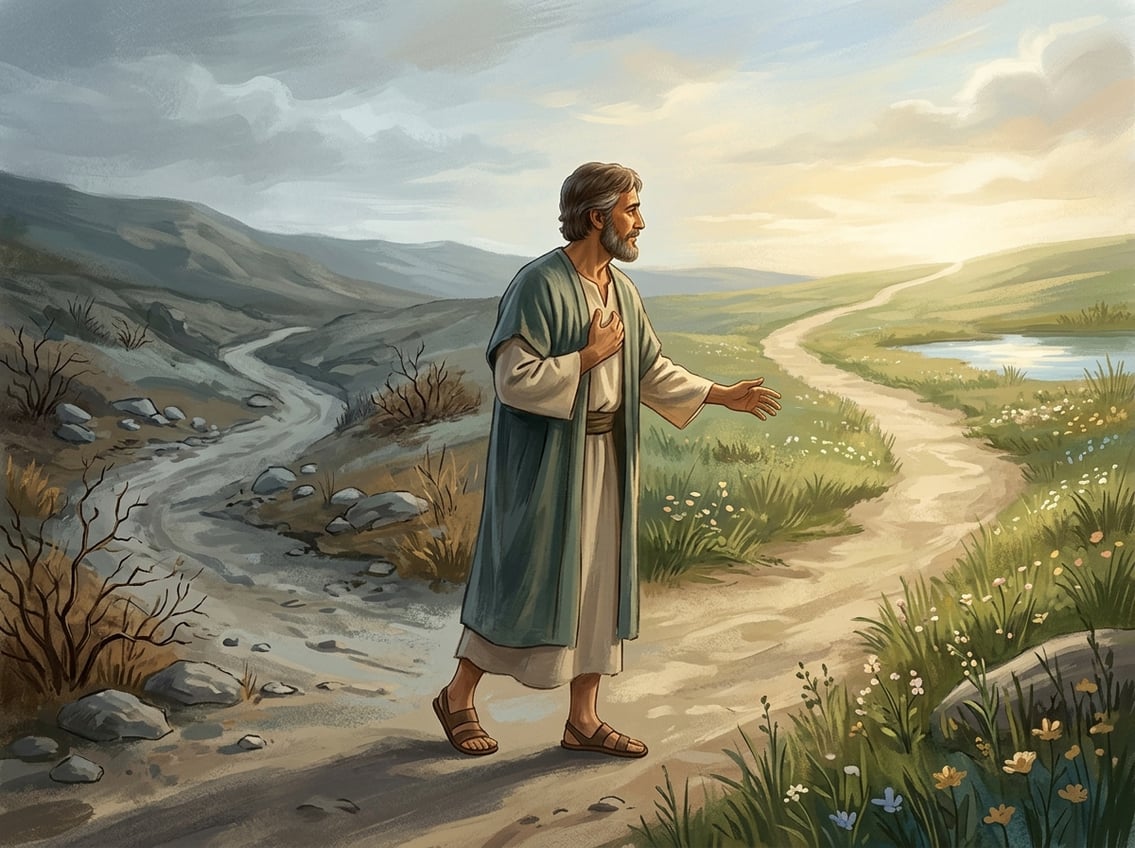
The Core Meaning: A Change of Mind and Direction
Biblical repentance combines an inner shift in thinking with an outward change in behavior. The word points to both a mental turn away from sin and a decision to move toward God.
Metanoia and the New Testament Call to Change
The Greek word behind "repent" in the New Testament is metanoia, which literally means a change of mind.
| Term | Language | Literal Meaning |
|---|---|---|
| Metanoia | Greek | Change of mind |
| Shuv | Hebrew | To turn, to return |
Key facts about metanoia:
- It first appears in Jesus's preaching: "Repent and believe in the gospel!" (Mark 1:15).
- It links a change of heart and mind to concrete action.
- Ancient Greek writers used it mainly for mental reconsideration, but New Testament writers expanded it to include a full change of direction in how a person lives.
This shift means metanoia is not just thinking differently. It is a decision that leads to a new way of living.
Turning From Sin and Turning Toward God
Biblical repentance always has two directions: away from sin and toward God.
Turning from sin:
- Recognizing wrongdoing as an offense against God.
- Feeling genuine sorrow, not just embarrassment (2 Corinthians 7:10).
- Stopping the sinful behavior, not just regretting it.
Turning toward God:
- Choosing to follow God's commands instead of personal desires.
- Seeking return to God as the goal, not just avoiding punishment.
- Building a new pattern of obedience and trust.
The Old Testament term shuv reinforces this idea. It means to turn back toward God after moving away from Him.
Paul told the Gentiles to "repent and turn to God and demonstrate their repentance by their deeds" (Acts 26:20). This shows both parts working together: turning away and turning toward.
Why Repentance Involves Heart, Mind, and Will
Biblical repentance touches three parts of a person, not just one.
| Component | What It Involves | Example Verse |
|---|---|---|
| Mind | Accepting truth about sin and God | Acts 2:38 |
| Heart | Feeling godly sorrow, not just guilt | 2 Corinthians 7:9-10 |
| Will | Taking action to change behavior | Matthew 3:8 |
Why all three matter:
- Mind alone produces only agreement without change.
- Heart alone produces emotion without lasting results.
- Will alone produces outward compliance without real conviction.
True biblical repentance requires all three working together. A person must understand the truth, feel sorrow for sin, and choose a new direction in daily life.
This three-part structure explains why the biblical meaning of repent
Repentance Is More Than Regret or Remorse
Regret and remorse focus on feelings after sin, while true repentance involves a change of mind and direction toward God. The Bible shows this difference clearly through the stories of Judas and Peter, and through Paul's teaching on sorrow in 2 Corinthians 7:10.
Godly Sorrow Compared With Worldly Sorrow
2 Corinthians 7:10 draws a clear line between two types of sorrow.
| Type of Sorrow | Focus | Result |
|---|---|---|
| Godly Sorrow | Turning toward God | Leads to genuine repentance and salvation |
| Worldly Sorrow | Focused on self and consequences | Leads to death |
Godly sorrow produces change. Worldly sorrow only produces regret over getting caught or fac
Repentance Throughout the Old and New Testaments
Repentance appears as a consistent call across both testaments, using different words but pointing to the same action: turning away from sin and back to God. The Old Testament frames this through Hebrew terms and prophetic warnings, while the New Testament sharpens the call through Jesus, John the Baptist, and the apostles.
Returning to God in the Old Testament
The Old Testament uses two key Hebrew words for repentance.
| Hebrew Word | Meaning | Example Use |
|---|---|---|
| Shub (sub) | To turn back, to return | Used for turning from sin toward God |
| Nacham | To be sorry, to comfort oneself, to relent | Used for God's own responses and human regret |
Shub is the more common term. It carries the idea of physically turning around and walking in a new direction. This word shows up in verses calling Israel to return to God after breaking the covenant.
Nacham appears differently. It sometimes describes God relenting from judgment, and other times describes human sorrow over wrongdoing.
Both words point to the same basic idea. Repentance in the Old Testament means turning back — leaving one path and choosing another.
The Prophets, David, and Nineveh
The prophets repeatedly called Israel to return to God. This message shows up as a direct command in several key passages.
Joel 2:12 — God says, "Return to me with all your heart, with fasting and weeping and mourning." This verse links repentance to specific actions: fasting, weeping, and grief over sin.
Psalm 51 — David wrote this psalm after his sin with Bathsheba. He asks God to "create in me a clean heart" and to "restore to me the joy of your salvation." This psalm models personal confession and inward change, not just outward ritual.
Nineveh — In the book of Jonah, the city of Nineveh repents after hearing Jonah's warning. Their response included three specific actions:
- Fasting — the king ordered the entire city to stop eating
- Prayer — the people cried out to God
- Humility — even the king removed his robe and sat in ashes
God saw their actions and relented from the judgment he had planned.
John the Baptist, Jesus, Peter, and Paul
The New Testament carries the same call forward, using the Greek word metanoia, meaning a change of mind that leads to a change in direction.
John the Baptist:
- Matthew 3:2 — "Repent, for the kingdom of heaven is at hand."
- Matthew 3:8 — "Bear fruit in keeping with repentance."
- Luke 3:8–14 — John gives specific examples of fruit: sharing clothing and food, collecting only what is owed, and not extorting money through threats.
Jesus Christ:
- Matthew 4:17 — Jesus begins his public ministry with the same message John preached: "Repent, for the kingdom of heaven is at hand."
Peter and Paul:
- Peter preaches repentance and baptism for the forgiveness of sins in his sermons in Acts.
- Paul describes his mission in Acts 26:20, saying he preached that people should "repent and turn to God, performing deeds in keeping with their repentance."
Across both testaments, repentance connects to action. It is not only a change in belief, but a visible shift in behavior that follows the change of heart.
Repentance, Faith, and the Gospel
The gospel calls people to two connected actions: turning away from sin and trusting in Jesus Christ. Together, repentance and faith open the way to forgiveness, grace, and a restored relationship with God.
Why Repentance and Faith Belong Together
Repentance and faith are not two separate steps. They work as one response to the gospel message.
| Term | What It Means | Direction |
|---|---|---|
| Repentance | Turning away from sin | Away from wrongdoing |
| Faith | Trusting in Jesus Christ | Toward the Savior |
Jesus stated this connection directly: "Repent and believe in the gospel" (Mark 1:15).
Paul used similar language, describing his preaching as a call to turn "toward God" and place faith "in our Lord Jesus Christ." A person cannot fully do one without the other. Repentance without faith leaves a person without a Savior. Faith without repentance ignores the seriousness of sin.
Forgiveness and Salvation Through Jesus Christ
Forgiveness comes through God's grace, not through personal effort. Jesus Christ, the Messiah, is the one who makes forgiveness possible.
Key points about salvation:
- Grace: God offers forgiveness as a gift, not something earned.
- Mercy: God withholds the punishment sin deserves.
- Faith in Jesus Christ: This is how a person receives God's grace (topical study on repentance and faith).
- Reconciliation with God: Repentance and faith
What Genuine Repentance Looks Like in Daily Life
Genuine repentance shows up in small, daily choices, not just one big moment of sorrow. It includes honest confession, changed actions, and a steady return to God after every failure.
Recognizing and Confessing Sin Honestly
Honest confession starts with naming sin clearly, not softening it or blaming someone else
Why the Call to Repent Remains Urgent
The message to repent connects directly to how the Bible describes God's kingdom, his patience with sin, and the ongoing nature of a changed life. These three ideas explain why repentance is not a one-time formality but a lasting requirement.
The Kingdom of God and the Kingdom of Heaven
Matthew's Gospel uses the phrase "kingdom of heaven," while Mark and Luke use "kingdom of God." Most scholars agree these terms describe the same reality.
| Term | Where Used | Meaning |
|---|---|---|
| Kingdom of Heaven | Matthew's Gospel | God's rule, described from a Jewish audience's perspective |
| Kingdom of God | Mark, Luke, rest of New Testament | God's rule over all creation and people |
| Heaven | Both Gospels | The place associated with God's presence and final reward |
Both John the Baptist and Jesus opened their public ministries with the same command: repent, because this kingdom is near. The nearness of God's rule is the reason repentance carries urgency instead of being optional advice.
Judgment, Mercy, and God's Patience
Scripture holds two truths together: God will judge sin, and God delays that judgment out of mercy.
- Judgment is real. The Bible consistently warns that sin has consequences.
- Acts 17:30 states that God now commands all people everywhere to repent, showing this call applies universally, not to one group.
- 2 Peter 3:9 explains that God is patient, not wanting anyone to perish, but wanting all to reach repentance.
- Luke 13:3 records Jesus warning that without repentance, people will perish.
- Salvation is tied directly to this response; ignoring the warning does not remove the outcome it describes.
God's mercy explains the delay. His patience is not
Frequently Asked Questions
Repentance in the Bible covers a change of mind, a turn away from sin, and specific steps found in key verses. The answers below break down these ideas into clear, quick facts.
What is the biblical definition of repentance?
Repentance means a complete change of mind that leads to a change in action. It is more than feeling sorry for sin.
| Term | Meaning | Bible Reference |
|---|---|---|
| Metanoia | Change of mind and purpose | Acts 3:19 |
| Metamelomai | Regret without lasting change | Matthew 27:3 |
| Shuv (Hebrew) | To turn or return | Joel 2:12-13 |
The full biblical definition of repentance includes four parts: awareness of guilt, trust in God's mercy, a changed attitude toward sin, and a new pattern of obedience.
Does repentance mean turning away from sin?
Yes. Turning away from sin is one part of repentance, but it is not the whole picture.
Repentance includes:
- Recognizing sin as wrong
- Feeling true sorrow for it
- Turning away from that sin
- Turning toward God in trust and obedience
A person who only feels bad about sin but keeps doing it has not fully repented. True repentance leads to agreeing with God about sin instead of defending it.
How do you repent according to the Bible?
The Bible does not give one single formula for repentance, but it shows a clear pattern through examples like Peter, Paul, and the prodigal son.
Basic steps shown in Scripture:
- Admit the sin openly to God (1 John 1:9)
- Feel genuine sorrow, not just regret (2 Corinthians 7:10)
- Ask God for forgiveness (Psalm 51:1-2)
- Turn away from the sinful action (Acts 3:19)
- Live in a new way that reflects the change (Luke 3:8)
There is no single passage that spells out every detail of repentance, but these steps appear across many Bible stories.
What are the steps of true biblical repentance?
True repentance follows a pattern that moves from the heart to daily life.
| Step | What It Looks Like | Example Verse |
|---|---|---|
| Conviction | Seeing sin as God sees it | Psalm 51:4 |
| Sorrow | Grief over sin, not just fear of punishment | 2 Corinthians 7:10 |
| Confession | Naming the sin to God | Psalm 32:5 |
| Turning | Walking away from the sinful action | Isaiah 55:7 |
| Fruit | New actions that show real change | Luke 3:8-14 |
This process is not a one-time event. Many believers repeat these steps throughout life as new sin is revealed.