Is Smoking Weed a Sin in the Bible? Scripture That Sticks
Local law matters too, since scripture calls for respect of governing authorities, so legality of marijuana in a Christian's state can factor into the decision.
Posted by
 Eden
EdenRelated reading
Are Dinosaurs Mentioned in the Bible? A Retention Guide
The Bible does not explain how these creatures came to an end.
How Did Samuel Die in the Bible? Memory Science Guide
Samuel was buried at his own house in Ramah, the town connected to most of his life and work, according to the account of his death and burial in 1 Samuel 25.
How Did Saul Die in the Bible? Scripture Memory Method
The death of King Saul marks the end of Israel's first monarchy in the Old Testament.
TL;DR
- The Bible does not name marijuana or cannabis directly, so smoking weed is not called a sin by name, but biblical principles about self-control, sobriety, and honoring the body guide how Christians view it.
- Bible verses on drunkenness and being led by the Holy Spirit are the main texts Christians use to judge if smoking weed is a sin.
- Christian faith teaches that anything causing loss of self-control or addiction goes against God's word, which applies to marijuana use just as it applies to alcohol.
- Whether cannabis use lines up with Christianity often depends on intent: medical use for pain differs from recreational use meant to get high.
- Local law matters too, since scripture calls for respect of governing authorities, so legality of marijuana in a Christian's state can factor into the decision.
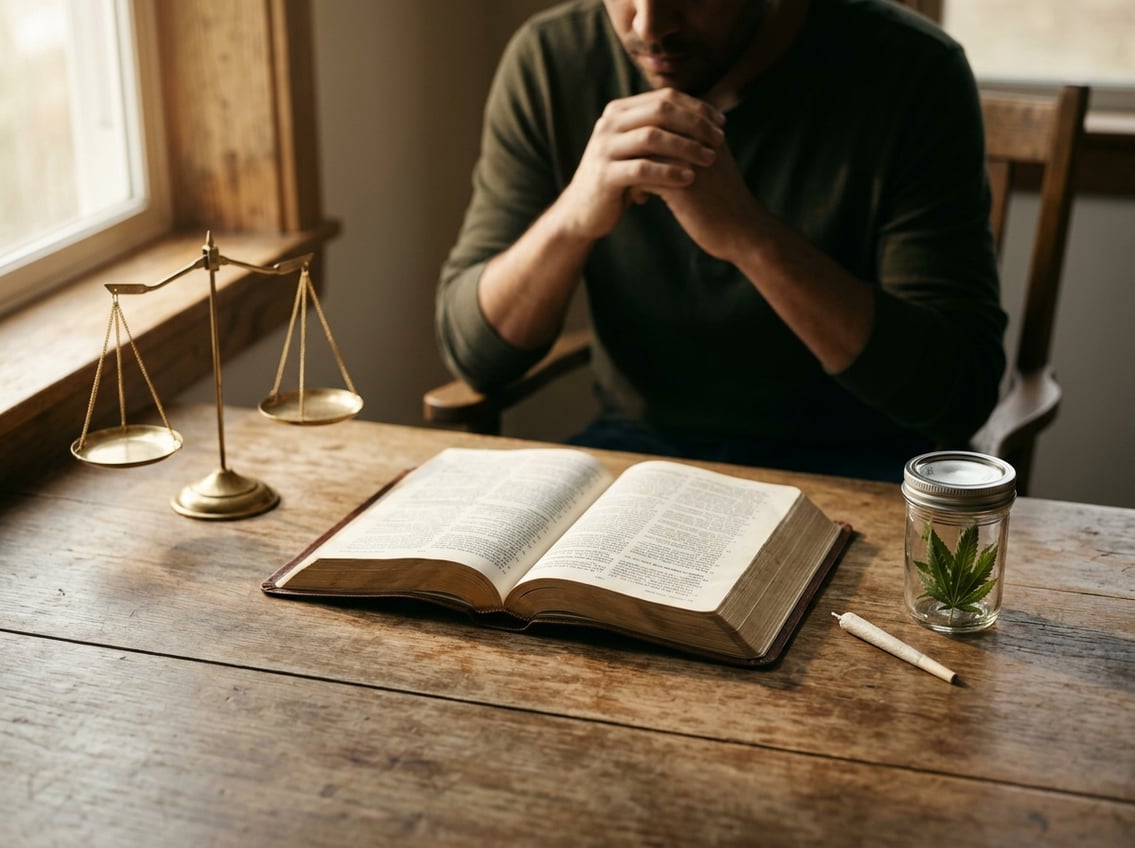
What Scripture Explicitly Says—and Does Not Say
The Bible never uses the word marijuana, but it offers direct commands about intoxication, self-control, and the body that apply to modern questions about drug use. Understanding what the text actually states—versus what people assume it implies—requires looking at specific bible verses rather than general impressions.
Why Marijuana Is Not Named in the Bible
Marijuana is not mentioned anywhere in Scripture, including the KJV translation.
The plant existed in the ancient world, but no biblical writer names it, describes smoking it, or addresses its effects directly.
This absence is not unusual. The Bible does not name most modern substances or technologies. It was written thousands of years before recreational drug culture as it exists today.
Because of this silence, any conclusion about smoking marijuana has to come from broader biblical principles rather than a single clear command. Readers looking for a direct verse that says "marijuana is a sin" will not find one.
Using Biblical Principles for Modern Questions
Scripture provides several principles that apply to substance use even without naming specific drugs:
| Principle | Key Verse | Application |
|---|---|---|
| Avoid intoxication | Ephesians 5:18 | Do not be controlled by a substance |
| Self-control | Galatians 5:22-23 | Fruit of the Spirit includes discipline |
| Body as temple | 1 Corinthians 6:19-20 | Honor the body in what is consumed |
| Sober-mindedness | 1 Peter 5:8 | Stay alert, not clouded in judgment |
These verses do not list drugs by name. Instead, they set a standard: does the substance impair judgment or create dependence?
Applying these principles requires wisdom, not just rule-following. The intention behind use—medical relief versus recreational escape—also shapes how these principles apply.
Why Genesis 1:29 Does Not Settle the Question
Genesis 1:29 states that God gave humans "every plant" for food. Some cite this verse to argue that marijuana use is automatically approved since God created the plant.
This reasoning has a problem. Genesis 1:29 lists plants for food, not for smoking or altering the mind.
What the verse does say:
- God created plants
- Plants were given for human use
- The context is nourishment, not intoxication
What the verse does not say:
- That every use of every plant is approved
- That smoking or vaping is covered under "for food"
- Anything about altering brain chemistry
Poison ivy and hemlock are also plants, but their existence does not make consuming them wise or safe. Jesus Christ never addressed marijuana directly, so this verse cannot serve as a final answer on its own.
Sobriety, Intoxication, and Spiritual Alertness
The Bible links a clear mind to spiritual readiness. Getting high changes how the brain works, and this connects directly to what scripture says about drunkenness and self-control.
How Getting High Relates to Drunkenness
Smoking weed and drinking alcohol both change how the brain works. Both can lead to a loss of control over thoughts and actions.
Comparison Table:
| Effect | Alcohol | Weed |
|---|---|---|
| Slows reaction time | Yes | Yes |
| Changes judgment | Yes | Yes |
| Alters mood or perception | Yes | Yes |
| Named directly in the Bible | Yes | No |
The Bible does not use the word "marijuana." But Ephesians 5:18 warns against being controlled by anything that clouds the mind. This verse focuses on wine, but the core issue is loss of self-control.
Many Bible teachers apply this same idea to recreational marijuana. The concern is not the plant. The concern is intoxication itself.
The Call to Be Sober-Minded
Sober-mindedness means having a clear, alert mind. The Bible connects this state to spiritual safety.
Key verse:
- 1 Peter 5:8 says to "be sober-minded" and "watchful" because danger is real and active.
What sober-mindedness looks like:
- Clear thinking
- Steady judgment
- Awareness of surroundings
- Ability to make careful choices
What intoxication removes:
- Clear thinking
- Steady judgment
- Awareness of surroundings
- Ability to make careful choices
Getting high works against every item on the first list. This is why many Christians see it as a conflict with biblical instruction, even without a direct command about weed.
Being Filled With the Holy Spirit
The Bible offers an alternative to intoxication: being filled with the Holy Spirit.
Direct contrast from Ephesians 5:18:
- Do not get drunk on wine.
- Instead, be filled with the Spirit.
This verse sets up two paths. One leads to a clouded mind. The other leads to spiritual clarity and connection to God.
Practical steps tied to this idea:
- Choose prayer instead of substances when seeking calm or relief.
- Ask for the Spirit's guidance before making decisions about weed use.
- Read scripture daily to reinforce a clear, alert mindset.
- Reflect on how each choice affects spiritual life, not just physical comfort.
A believer's spiritual life depends on staying alert and connected to God. Intoxication, by design, works against that goal.
Honoring God With Body and Mind
Scripture teaches that the body belongs to God, not just to the individual who lives in it. This principle shapes how Christians think about substances like marijuana, weighing physical health, mental clarity, and spiritual responsibility together.
The Body as God’s Temple
The clearest teaching on this topic comes from Paul's letter to the Corinthians.
| Verse | Text | Meaning |
|---|---|---|
| 1 Corinthians 6:19-20 | "Do you not know that your bodies are temples of the Holy Spirit, who is in you, whom you have received from God? You are not your own; you were bought at a price." | The body is not fully owned by the person living in it. |
Key points from this passage:
- The Holy Spirit lives inside every believer.
- 1 Corinthians 6:19–20 describes the body as a dwelling place for God, not a possession to use however a person wants.
- Because Jesus paid a price for believers, personal choices about the body carry spiritual weight.
- This connects directly to why the body matters to God as a matter of holiness, not just health.
Treating the body as God's temple means avoiding anything that damages it without necessity or purpose.
Health, Mental Health, and Smoking Risks
Marijuana affects both the body and the mind. The known physical and mental risks are listed below.
Physical risks:
- Increased heart rate, which can raise the chance of heart attack or stroke
- Aggravation of asthma symptoms
- Spasms in the bronchial tubes
Mental and cognitive risks:
- Reduced memory and thinking ability
- Feelings of panic or fear
- Hallucinations
- Lower coordination for tasks that require focus
These effects are outlined in detail in a breakdown of smoking and vaping risks. Mental health concerns are especially relevant, since impaired judgment and anxiety can affect a person's ability to think clearly and make sound decisions. A sober mind is a repeated theme in scripture, and it applies directly to substances that alter perception or mood.
Stewardship as a Christian Test
Stewardship means managing what God has given, including the body, with care and responsibility. Romans 12:1 reinforces this by calling believers to offer their bodies as "a living sacrifice, holy and pleasing to God."
A simple stewardship test:
- Does this substance impair judgment or self-control?
Freedom, Dependence, and Wise Limits
Christian freedom is not the same as doing whatever a person wants. It means using choices wisely, staying in control, and thinking about how a habit affects the body and mind.
When Cannabis Use Becomes Controlling
Paul wrote in 1 Corinthians 6:12 that all things may be lawful, but not all things are beneficial, and he refused to be mastered by anything. That verse applies directly to marijuana use.
Proverbs 25:28 compares a person without self-control to a city with broken walls. No walls means no protection.
Signs a habit has become controlling include:
- Using cannabis daily just to feel normal
- Feeling anxious or irritable without it
- Hiding use from family or spiplus church community
- Needing more to get the same effect
These signs point to excess, not simple enjoyment. When a substance calls the shots, the person is no longer free.
Testing Whether a Choice Is Bene
Medical Cannabis and Recreational Use
The Bible does not mention marijuana by name, so Christians often look at intention and effect to decide if its use lines up with biblical principles. This means the difference between medical treatment and recreational use often comes down to why a person is using cannabis and what it does to their body and mind.
Distinguishing Treatment From Escapism
The line between healing and escapism often comes down to purpose. Using cannabis to manage a diagnosed medical condition is different from using it to get high or avoid stress.
Some questions can help clarify intention:
- Is the goal pain relief, or is it to feel a mental high?
- Would the person still use cannabis if it had no psychoactive effect?
- Does the use interfere with clear thinking or self-control?
According to GotQuestions.org, Christians are called to be sober-minded, which means avoiding substances that cloud judgment. This standard applies whether the use is labeled medical or recreational.
Questions to Ask About Medical Marijuana
Before using medical marijuana, it helps to ask direct questions about its purpose and effects.
| Question | Why It Matters |
|---|---|
| What condition is being treated? | Confirms medical necessity |
| Is a non-smoked form available? | Reduces health risks tied to smoking |
| Does it impair daily function? | Affects ability to stay clear-minded |
| Is it legal in the current location? | Relates to biblical instruction to follow local law |
PrestoDoctor notes that many Christians weigh sober-mindedness and bodily health alongside legality when making this decision. These questions help separate genuine treatment from casual or recreational marijuana use disguised as medical need.
Working With Qualified Medical Care
Working with a licensed doctor is one of the clearest ways to confirm that cannabis use is medically justified. A qualified provider can confirm a diagnosis, recommend proper dosage, and suggest non-smoked options such as oils or tinctures.
This approach supports the biblical principle of caring for the body as something valuable, not something to misuse. Bible Study Tools points out that many Christians see honoring the body as central to this decision. Choosing legitimate medical guidance, rather than self-directed use, helps keep the focus on healing rather than getting high.
Conscience, Relationships, and Grace
Romans 14 gives Christians a way to think about personal choices that the Bible does not directly address. It also shows how those choices affect other people and how grace covers mistakes along the way.
Applying Romans 14 to Personal Convictions
Romans 14 deals with disputable matters, things the Bible does not clearly call sin or clean.
| Verse | Plain-English Meaning | Application to Weed Use |
|---|---|---|
| Romans 14:13 | Stop judging each other. Instead, avoid putting a stumbling block in front of others. | Focus less on judging someone else's choice and more on how personal use might affect others. |
| Romans 14:22 | Whatever a person believes about these things should be kept between them and God. | Personal conviction on marijuana use should be tested against biblical principles, not just personal preference. |
| Romans 14:23 | Whatever is not from faith is sin. | If someone has doubt about weed use, doing it anyway goes against conscience. |
This chapter does not settle the debate outright. It asks each person to act according to conscience and faith, based on God's Word.
Considering Influence Within the Community
Personal freedom does not exist in isolation. Choices affect relationships inside a church community and beyond it.
Questions to ask before acting on personal conviction:
- Does this choice cause confusion for someone newer in their Christian faith?
- Could this action be seen as reckless or careless by others watching?
- Does this choice match the example set by Jesus, who lived with self-control?
- Will this affect trust or unity within the community?
A balanced look at the debate shows both sides cite Scripture, but the shared conclusion is that love for others often outweighs personal preference. Christians are called to weigh their own freedom against the wellbeing of the group around them.
Responding to Failure With Forgiveness and Help
Mistakes and struggles with substance use do not disqualify someone from grace.
Steps for responding to failure
Frequently Asked Questions
These questions cover common concerns Christians have about marijuana use, addiction, sobriety, and worship. Each answer uses direct biblical principles since the Bible does not name marijuana specifically.
What does the Bible say about using marijuana?
The Bible never mentions marijuana by name. It was written thousands of years before modern marijuana use began.
Instead, the Bible gives principles that apply to any substance:
| Principle | Bible Reference | What It Means |
|---|---|---|
| Avoid drunkenness | Ephesians 5:18 | Don't let a substance control your mind |
| Body is a temple | 1 Corinthians 6:19-20 | Treat your body with respect |
| Practice self-control | Galatians 5:22-23 | Self-control is a sign of spiritual growth |
| Obey the law | Romans 13:1-2 | Follow the laws of your state or country |
Christians use these principles about sobriety and self-control to decide how marijuana fits into their faith.
Is occasional marijuana use considered sinful for Christians?
There's no single answer that applies to every person or situation. It depends on the reason for use, the amount used, and whether it leads to a loss of self-control.
Key factors to consider:
- Purpose: Is it for medical relief or to get high?
- Frequency: Occasional use differs from daily use.
- Effect: Does it cause impairment or intoxication?
- Law: Is it legal in the person's state or country?
Some Christians believe occasional use without intoxication may not violate biblical principles, while others avoid it entirely to stay cautious.