Why Isn't Lilith in the Christian Bible? Facts That Stick
Understanding this distinction helps readers separate what scripture actually says from later additions and interpretations.
Posted by
 Eden
EdenRelated reading
Are Dinosaurs Mentioned in the Bible? A Retention Guide
The Bible does not explain how these creatures came to an end.
How Did Samuel Die in the Bible? Memory Science Guide
Samuel was buried at his own house in Ramah, the town connected to most of his life and work, according to the account of his death and burial in 1 Samuel 25.
How Did Saul Die in the Bible? Scripture Memory Method
The death of King Saul marks the end of Israel's first monarchy in the Old Testament.
TL;DR
- Lilith is not in the Christian Bible because her story comes from later Jewish folklore, not from Genesis or any book in Christian scripture.
- The only related word appears in Isaiah 34:14, where "lilith" is translated as "screech owl," not as a named character.
- Lilith's exclusion from the Bible reflects a difference between canonical religious texts and non-canonical folklore written centuries after the Old Testament was completed.
- Stories about Lilith as Adam's first wife appear in texts like the Alphabet of Ben Sirach and the Babylonian Talmud, both written long after the biblical account of creation.
- Understanding this distinction helps readers separate what scripture actually says from later additions and interpretations.
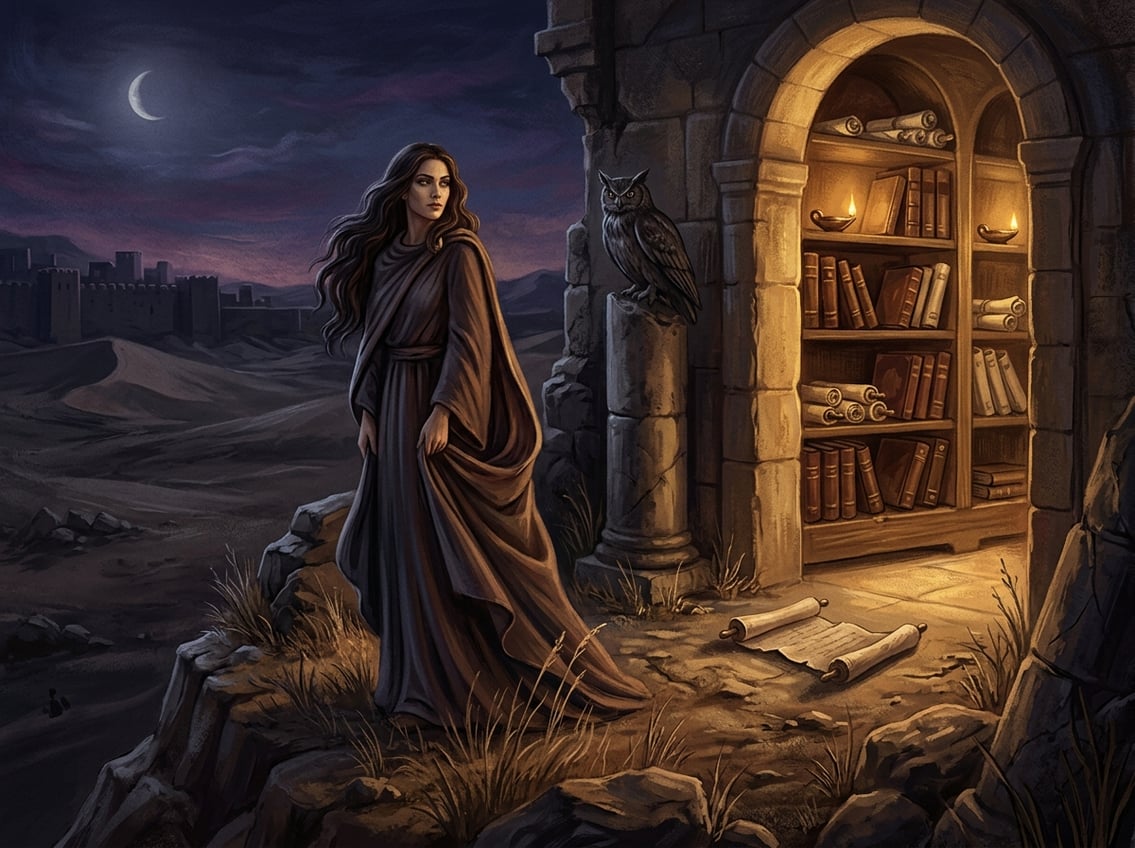
The Biblical Creation Account Names Eve, Not Lilith
The Hebrew Bible tells the story of the first woman in two connected passages, and both name her Eve. No canonical text calls her Lilith or describes her as Adam's first wife.
Reading Genesis 1 and Genesis 2 Together
The Old Testament gives two creation accounts, and they work together rather than against each other.
| Passage | What It Says |
|---|---|
| Genesis 1:27 | God creates man and woman at the same time, both made in God's image |
| Genesis 2:18-22 | God forms Adam first, then builds the woman from his rib while he sleeps |
These two accounts describe two contradictory-sounding versions of creation, but Jewish and Christian tradition reads them as one connected story. Genesis 1 gives the summary. Genesis 2 fills in the details of the Garden of Eden. Neither passage mentions a separate first wife made before Eve.
Eve as the Mother of All Living
Genesis 3:20 gives the woman her name and explains why Adam chose it.
- Verse: Genesis 3:20
- Text meaning: Adam names his wife Eve because she becomes "the mother of all living"
- Placement: This happens after the fall, right before Adam and Eve leave the Garden of Eden
- Significance: The name ties Eve directly to human origin, not to any prior woman
This verse is the clearest link between Adam and Eve as a couple. It confirms Eve, not Lilith, as the woman whose role centers on being humanity's origin point. The Genesis text gives no indication of another wife before her.
Why Adam's First Wife Is Not a Genesis Tradition
The idea of Adam having a first wife before Eve does not come from any biblical text.
- Search the canonical texts: Genesis 1 and Genesis 2 name only Eve.
- Check the source of the Lilith story: It comes from the medieval Alphabet of Ben Sira, a text written centuries after the Hebrew Bible was completed.
- **Compare to Genesis 2
Isaiah 34:14 and the Debate Over the Hebrew Term
The word "lilith" appears only once in the entire Hebrew Bible, tucked inside a single verse of judgment poetry. That rarity is the reason scholars, translators, and bible study groups still argue over what it actually means.
Lilith, Night Creature, or Screech Owl?
Isaiah 34:14 uses the Hebrew term lilith alongside other wild, symbolic animals in a scene of total desolation.
Here is how major translations handle the word:
| Translation | Rendering of "Lilith" |
|---|---|
| King James Version | Screech owl |
| Some modern scholarly translations | Night creature |
| Older folklore-influenced readings | Night monster or night spirit |
The disagreement comes from the word's resemblance to lilitu, a term for night demons in ancient Babylonian texts. Some readers see that link and assume Isaiah meant a supernatural being. Others argue the Hebrew word lilith simply describes a nocturnal animal fitting the verse's list of desert wildlife, similar to how a screech owl reading is used in the King James Version.
Edom and the Context of Isaiah's Judgment Oracle
Isaiah 34 is not about creation or human origins. It is a prophecy of judgment against Edom, a nation condemned for opposing Israel.
Key facts about the passage's setting:
- The chapter describes Edom's land turning into a wasteland.
- Wild animals—jackals, goat-demons, and desert creatures—are listed as signs of abandonment.
- The lilith reference sits among this list, not in a narrative about people.
- The imagery is poetic and symbolic, common in Hebrew prophetic writing.
Scholars studying this prophecy against Edom point out that the entire passage functions as a picture of ruin, not a record of specific spiritual beings living in the region. The judgment oracle context matters because it shapes how the single word should be read.
Why One Ambiguous Word Cannot Create an Eden Narrative
A single, debated word inside a judgment poem cannot support a full backstory about Adam's first wife.
Quick comparison of what the text supports versus what later legend added:
| What Isaiah 34:14 Actually Contains | What It Does Not Contain |
|---|---|
| A list of desert animals | Any mention of Adam or Eve |
| Imagery of judgment on Edom | A creation account |
| One rare, disputed term | A named female figure with a backstory |
The idea of Lilith as Adam's rebellious first wife comes from the Alphabet of Ben Sira, a medieval Jewish text written centuries after Isaiah. That source is not part of scripture and was never included in the Old Testament. The gap between one ambiguous word in a prophetic oracle and a detailed origin story is too wide to bridge through sound bible study methods.
How Lilith Developed in Jewish Folklore and Mysticism
Lilith's story did not start in one place. It grew over centuries, moving from ancient myths to rabbinic texts to medieval mysticism, with each era adding new details to her character.
Ancient Mesopotamian Night Spirits and Lilitu
Lilith's roots trace back to ancient Mesopotamia, where spirits called lilitu and lilu appeared in early myths. These beings were part of a larger group of Mesopotamian night spirits tied to storms, disease, and death.
The lilitu were female demons believed to harm sleeping men and steal newborns. Some scholars link these spirits to a minor character in the Epic of Gilgamesh, where a demon lives in a tree sacred to the goddess Inanna.
This connection shows how old Mesopotamian mythology shaped later Jewish ideas about female demons. The name and traits of lilitu carried forward into Hebrew tradition, even though the stories changed over time.
Lilith in the Talmud and Dead Sea Scrolls
Jewish texts mention Lilith long before her famous "first wife" story existed. The Babylonian Talmud refers to her several times, usually as a warning figure.
| Text | Reference | Description |
|---|---|---|
| Babylonian Talmud | Eruvin 100b | Lilith has long hair and wings, like a demon |
| Babylonian Talmud | Shabbat 151b | Sleeping alone in a house invites Lilith |
| Babylonian Talmud | Niddah 24b | A child born with unusual features is called "Lilith's child" |
The Dead Sea Scrolls also contain early references to Lilith. One scroll includes her name in a list of demons that threaten people at night.
These early Jewish texts treat Lilith as a night spirit, not yet as Adam's wife. She represents danger, especially linked to nocturnal emissions and threats to sleeping men.
The Alphabet of Ben Sira and the First-Wife Legend
The most famous Lilith story comes from the Alphabet of Ben Sira, a satirical Jewish text written between 700 and 1000 AD. This is where Lilith first appears as Adam's first wife, made from the same clay as Adam.
According to this legend:
- Lilith refused to lie beneath Adam during sex, claiming they were equals
- She spoke God's secret name and flew away from the Garden of Eden
- Three angels chased her toward the Red Sea but failed to bring her back
- She was cursed to lose 100 demon children each day as punishment
- She became a seductress and mother of demon children
This story turned Lilith into a symbol of defiance and female sexuality outside male control. The Alphabet of Ben-Sira mixed humor with folklore, but its version of Lilith became the most repeated one in later Jewish mythology.
Later Kabbalistic and Zohar Traditions
Jewish mysticism expanded Lilith's role during the medieval period. The Zohar, a core text of Kabbalah written in the 13th century, gave Lilith a larger place in Jewish demonology.
In Kabbalistic thought, Lilith became linked to Samael, a powerful demon figure, and was sometimes described as his consort. She was blamed for harming women in childbirth and for tempting men through dreams, acting much like a succubus in later mythology.
The Zohar also connected Lilith to cosmic evil, treating her as more than a simple night spirit. She symbolized disorder and represented forces working against divine order in the world.
Canon Formation Does Not Mean Lilith Was Removed
The formation of the Christian Bible followed a clear historical process, and Lilith was never part of that process to begin with. Understanding how canonization worked shows why her absence reflects her origins outside Scripture, not an act of removal.
How Jewish and Christian Canonization Worked
Canon formation was not a single event. It happened over centuries through community use, consistency, and recognition of authority.
Old Testament canon:
- Jewish communities recognized their sacred texts long before Christianity existed.
- These texts became the basis for the Christian Old Testament.
New Testament canon:
- Early Christian church leaders evaluated writings based on apostolic origin.
- Texts had to align with established teaching and see wide use across churches.
- Councils in the 4th century confirmed lists already accepted by most communities.
This process focused on identifying texts already treated as authoritative. It was not a filtering system designed to remove unwanted characters or stories.
Distinguishing Biblical Canon From Folklore and Literature
Biblical canon and folklore developed through different paths. They served different purposes and came from different sources.
| Category | Examples | Source |
|---|---|---|
| Canonical texts | Genesis, Exodus, Gospels | Jewish and Christian religious authorities |
| Jewish folklore | Lilith stories | Later rabbinic and mystical writings |
| Literature | Alphabet of Ben Sira | Medieval satirical text |
The Lilith story comes from the Alphabet of Ben Sira, a text written long after both the Jewish and Christian canons closed. It was never submitted for consideration as Scripture. It functioned as folklore and later mystical writing, not as a candidate for biblical inclusion.
Why the New Testament Does Not Add a Lilith Story
The New Testament does not reference Lilith because its focus stayed on specific theological aims.
What the New Testament does include:
- Teachings of Jesus
- Letters from apostles
- Accounts of the early church
What it does not include:
- Expansions on Genesis characters
- Jewish folklore developed after Old Testament times
- Mystical or symbolic figures from post-biblical Jewish thought
The New Testament writers worked from established Jewish Scripture and apostolic testimony. They had no reason to add later folklore, since Lilith's role in biblical history developed independently of the events and teachings the New Testament recorded.
Gender, Rebellion, and Modern Interpretations
Lilith's absence from Scripture has not stopped her from becoming a cultural symbol tied to gender, sexuality, and resistance to authority. Modern readers often connect her to questions about gender roles and personal independence that Genesis itself does not address.
Lilith as a Figure of Female Autonomy
In folklore, Lilith is often described as refusing to submit to Adam, which later writers turned into a story about independence.
This portrayal has made her a symbol of female autonomy and female independence in modern culture. Some writers connect her refusal to obey with themes of feminine power and control over one's own choices.
Her story is also linked to female sexuality, since some versions describe her leaving Eden to act on her own desires. These themes are part of modern reinterpretations of Lilith's myth in literature and feminism, not part of the Bible.
It is worth noting that none of this comes from Genesis. The autonomy theme is a later addition, built long after the biblical text was written.
Feminist Readings and Their Historical Limits
Feminist scholars have used Lilith's story to explore ideas about gender equality and resistance to control. In these readings, she often becomes a feminist icon tied to rebellion against imposed roles.
| Feminist Reading | Common Theme |
|---|---|
| Lilith as first equal partner | Challenges idea that women are secondary |
| Lilith as rebel | Symbol of resistance to control |
| Lilith as sexual figure | Reclaiming ownership of female sexuality |
These interpretations are shaped by feminist movements from the 19th and 20th centuries, not by ancient Jewish or Christian texts. Later depictions in feminist literature and thought reworked the medieval legend to fit modern concerns.
The limit is clear: these readings are cultural commentary, not biblical exegesis. Lilith's use as a symbol of female empowerment reflects modern values projected onto an old folk tale, not a hidden teaching from Scripture.
Traditional Gender Roles and Patriarchal Authority
Some interpreters read the Lilith legend as a reaction against patriarchal authority in ancient society. In this view, her story reflects anxiety about women who did not accept traditional gender roles.
Key points often raised in this discussion:
- Lilith's refusal to submit is sometimes framed as a threat to a patriarchal society.
- Her story can be read as a warning tale meant to reinforce patriarchal values.
- Some modern critics argue the legend reflects patriarchal oppression of women who acted independently.
- The Genesis account, by contrast, does not present Eve this way; it names her as a companion, not a rival.
This raises broader questions about power dynamics, gender roles, and how creation stories were used to support or challenge social structures, a point noted in discussions of Lilith's characterization as an independent figure. These questions are interesting for cultural study, but they remain separate from what the Bible actually teaches.
Lilith in Art, Literature, and Popular Culture
Lilith's absence from scripture did not stop her story from growing. Writers, artists, and musicians took the fragments from Jewish mythology and folklore and turned her into one of the most recognizable figures in modern storytelling.
From Demon Figure to Cultural Symbol
Lilith started as a feared figure in old Jewish texts. She was linked to night demons and danger
Frequently Asked Questions
Lilith raises common questions because her name appears in only one debated Bible verse, yet she is tied to a much longer folklore tradition. Below are direct answers to the most searched questions about her place in Scripture.