Who Wrote Revelation in the Bible? Evidence That Sticks
Some scholars debate whether the author was John the Apostle or a separate figure known as John of Patmos, though most early church testimony supports the apostle.
Posted by
 Eden
EdenRelated reading
Are Dinosaurs Mentioned in the Bible? A Retention Guide
The Bible does not explain how these creatures came to an end.
How Did Samuel Die in the Bible? Memory Science Guide
Samuel was buried at his own house in Ramah, the town connected to most of his life and work, according to the account of his death and burial in 1 Samuel 25.
How Did Saul Die in the Bible? Scripture Memory Method
The death of King Saul marks the end of Israel's first monarchy in the Old Testament.
TL;DR
- The apostle John, a follower of Jesus, wrote the Book of Revelation while exiled on the island of Patmos, likely around 95 A.D.
- Revelation is the final book of the New Testament and closes out the entire Bible.
- The text is also called the Revelation to John or the Apocalypse of John, based on internal claims in the opening chapter.
- Internal evidence, such as shared themes and phrases with the Gospel of John, links the author to the apostle rather than an unnamed or pseudonymous writer.
- Some scholars debate whether the author was John the Apostle or a separate figure known as John of Patmos, though most early church testimony supports the apostle.
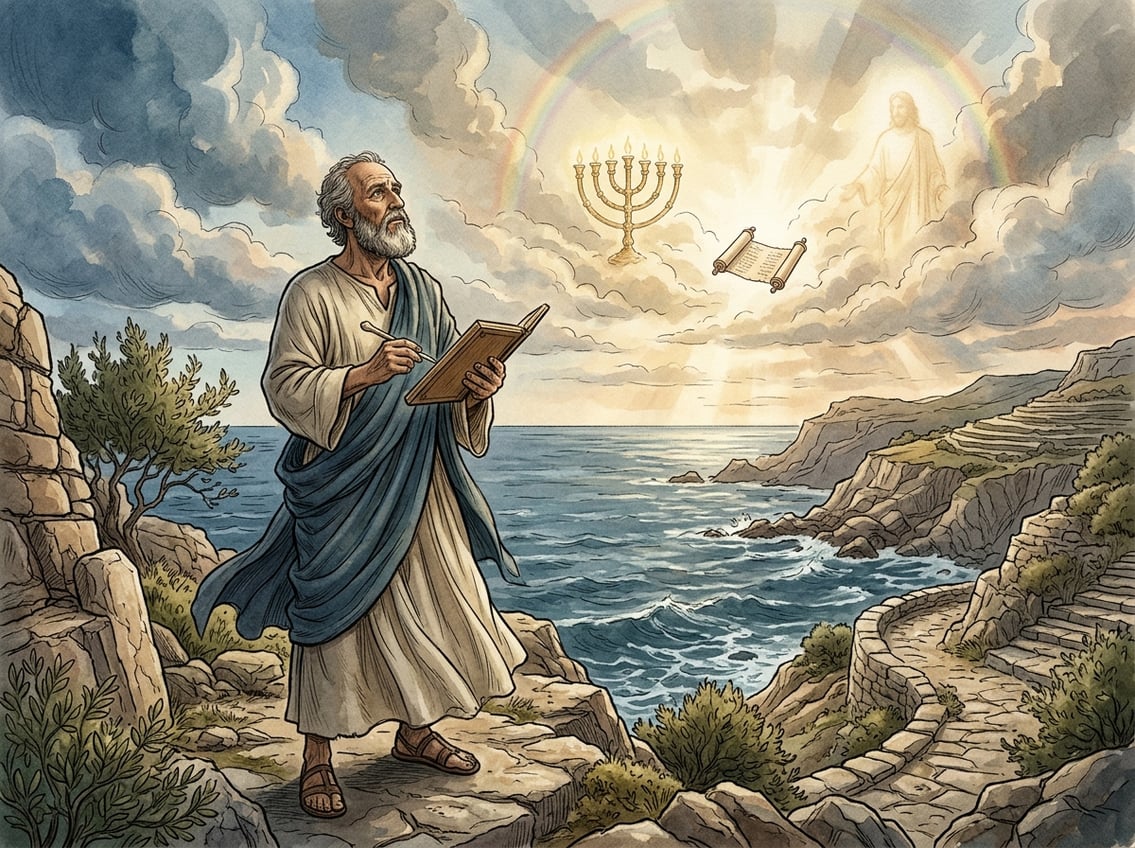
The Short Answer: John of Patmos
Most Bible scholars and church traditions credit the book of Revelation to a man named John who was living in exile on the island of Patmos. The text names its author but leaves room for debate about which John this actually was.
What Revelation Explicitly Says About Its Writer
The book identifies its author directly in several verses:
- Revelation 1:1 – The vision is described as being shown to "his servant John."
- Revelation 1:4 – John addresses the letter to seven churches in Asia, identifying himself as the sender.
- Revelation 1:9 – John states he is on the island of Patmos "because of the word of God and the testimony of Jesus," placing him there during a period of exile.
These verses confirm three things:
- The author's name was John.
- He wrote while exiled on Patmos.
- He addressed real churches, suggesting he held some authority or recognition among them.
This is the strongest internal evidence the book offers about its own authorship.
Why Identifying Which John Is Difficult
Revelation names its author but does not clarify which John wrote it. Three main candidates exist:
| Candidate | Basis for the Claim | Main Challenge |
|---|---|---|
| John the Apostle | Early church tradition links him to apostolic authorship | Style and language differ from the Gospel of John |
| John the Elder | Mentioned by early historian Papias as a separate figure | Little is known about him beyond this reference |
| An unnamed prophet named John | Text only claims prophetic authority, not apostleship | No external confirmation of his identity |
The confusion stems from the fact that "John" was a common name in the first century. Early church writers themselves disagreed on which John wrote Revelation, and the text does not call its author an apostle. This ambiguity is why scholars often use the neutral title "John of Patmos" rather than assuming it refers to John the Apostle.
The Traditional Case for John the Apostle
Christian tradition has long credited John the Apostle with writing the Book of Revelation. This view rests on three main pillars: statements from early church fathers, John's documented ministry in Asia Minor, and his close personal relationship with Jesus.
Early Church Testimony
Several early church fathers directly linked the Apostle John to the Book of Revelation.
| Church Father | Approximate Era | Key Claim |
|---|---|---|
| Justin Martyr | 2nd century | Identified John the apostle as the author of Revelation |
| Irenaeus | 2nd century | Called John "the Lord's disciple" and cited him as the writer in Against Heresies |
| Clement of Alexandria | 2nd-3rd century | Affirmed apostolic authorship within early church writings |
| Tertullian | 2nd-3rd century | Supported the tradition connecting John to Revelation |
| Hippolytus | 3rd century | Continued the early consensus on John's authorship |
Irenaeus carried special weight because he had personal ties to Polycarp, who reportedly studied under John himself.
This chain of testimony gave the tradition strong apostolic authority in the eyes of the early church.
John's Ministry in Asia Minor
John the Apostle is widely believed to have led churches in Ephesus and other parts of Asia Minor later in his life.
This location matters for one clear reason: Revelation is addressed to seven churches in that same region.
- Ephesus
- Smyrna
- Pergamum
- Thyatira
- Sardis
- Philadelphia
- Laodicea
A leader already known and trusted in these cities would have had both the standing and the familiarity needed to write directly to them with authority.
Connections With Jesus' Inner Circle
John held a place among Jesus' closest followers, which supports the case for his authorship.
Key facts about John's inner circle:
- He was one of the original twelve apostles.
- He was part of a smaller group that included Peter and James.
- This inner circle witnessed the Transfiguration in Matthew 17 and Mark's Gospel.
- Many traditions link John to the title "the disciple whom Jesus loved."
This closeness to Jesus placed John in a unique position among the apostles. Someone with this level of access and trust would fit the kind of authoritative voice found throughout Revelation's text.
Patmos, Exile, and the Seven Churches
John wrote Revelation while living in exile on a small island called Patmos.
Why Scholars Debate Johannine Authorship
The Book of Revelation names its author only as "John," and this simple detail has caused centuries of debate. Scholars look at writing style, historical clues, and church tradition to decide if this John is the same person who wrote the Gospel of John and the three epistles of John.
Greek Style and Literary Genre
The Greek style of Revelation looks very different from the Gospel of John and the epistles of John.
Revelation uses rougher Koine Greek grammar. It has odd word order and grammar mistakes that do not match the smoother Greek in 1 John, 2 John, and 3 John.
The genre is also different. The Fourth Gospel tells a story about Jesus's life. Revelation is apocalyptic literature, a type of apocalyptic prophecy full of visions, symbols, and coded messages. This kind of writing, called an apocalypse, follows its own rules and often uses different vocabulary than a gospel or letter.
These style gaps lead some scholars to think a different person wrote Revelation, even if that person still had ties to the Johannine community.
John the Elder and Other Proposals
Early church writers did not always agree on which John wrote Revelation. A key piece of evidence comes from Papias of Hierapolis, an early Christian writer who mentioned two men named John in his own writings.
Eusebius, writing his Ecclesiastical History much later, read Papias's words and argued there were two different Johns:
- John the apostle – one of Jesus's twelve disciples
- John the elder – a separate church leader in Asia Minor
Eusebius suggested John the elder, not the apostle, wrote Revelation. This idea helped Eusebius downplay Revelation's teaching on the future because he did not fully trust the book.
Other early writers, like Justin Martyr and Irenaeus, said
How Authorship Shapes the Book's Message
Knowing who wrote Revelation helps readers understand its message. The author's identity connects the book's prophecy, its focus on Jesus Christ, and its promise of hope for believers.
Revelation as Prophecy, Letter, and Apocalypse
Revelation mixes three types of writing. It is a prophecy, a letter, and an apocalyptic vision all at once.
The author calls his work a prophecy in the opening verses. He also writes it as a letter to seven real churches in Asia Minor.
The apocalyptic style uses symbols and visions to show hidden truths. This type of writing was common in Jewish and early Christian texts.
Understanding the author as someone who blends these styles helps explain the book's structure. He moves between direct messages to churches and grand visions of heaven and the future. This mix is part of why the book uses symbols and visions to explain God's plan.
Jesus Christ as the Victorious Lamb
The author presents Jesus Christ using clear images. Each title shows a different side of who Jesus is.
| Title | Meaning |
|---|---|
| Son of Man | Shows Jesus as human and divine |
| Lamb of God | Shows Jesus as the sacrifice for sin |
| Lion of Judah | Shows Jesus as a powerful ruler |
The Lamb appears as both gentle and strong. He defeats Satan, death, and Hades through his sacrifice and resurrection.
The author also writes about seven stars, which represent church leaders under Christ's care. This detail shows that Jesus holds authority over the church.
The Holy Spirit works alongside Jesus to deliver these messages to God's people.
Hope for Faithful Christians
The author writes to give hope to Christians facing hard times. His message points to God's final victory over evil.
Key promises in the text include:
- Salvation for those who remain faithful
- The second coming of Jesus Christ
- A new heaven and new earth
- Eternal life in heaven with God
This hope shaped early Christianity and helped the book gain a place in the New Testament canon. The author's identity, whether the apostle John or another early Christian leader, does not change this core message. The focus stays on comfort and hope for believers under pressure.
Frequently Asked Questions
The identity, timeline, and purpose behind the Book of Revelation raise several common questions among readers. Below are direct answers to the most asked questions about its author and origin.
Who is John of Patmos, and what is his connection to the Book of Revelation?
John of Patmos is the name given to the writer of Revelation. He identifies himself as "John" in Revelation 1:4, and he says he received his vision while on the island of Patmos.
Key facts about John of Patmos:
- He was exiled to Patmos, a small island in the Aegean Sea.
- He received a vision from Jesus Christ during this exile.
- He wrote down what he saw and sent it to seven churches in Asia Minor.
- The letter he wrote became the Book of Revelation.
Did the Apostle John write the Book of Revelation?
Many early Christian leaders believed the Apostle John, one of the twelve disciples of Jesus, wrote Revelation. This view has been widely taught in church history, though scholars still debate it today.
| Point of View | What It Claims |
|---|---|
| Traditional view | The Apostle John wrote Revelation late in his life |
| Alternate view | A different person named John, sometimes called "John the Elder," wrote it |
| Textual evidence | The author identifies himself only as John, without naming himself as an apostle |
The text itself does not use the title "apostle" for the writer. This is one reason some scholars question whether the Apostle John and the author of Revelation are the same person.
Was John of Patmos the same person as John the Apostle?
This question does not have one certain answer. Early church tradition often treated them as the same person.
Reasons some support this view:
- Early church leaders like Irenaeus linked the author to the Apostle John.
- The writing style shares some similarities with the Gospel of John.
- Church tradition placed the Apostle John in Asia Minor later in life, near where Revelation was sent.
Reasons some question this view:
- The Greek writing style in Revelation differs from the Gospel of John in grammar and word choice.
- The author never claims the title "apostle" for himself.
- Some early writers described a separate figure known as John the Elder.
When was the Book of Revelation written?
Most scholars place the writing of Revelation around AD 95 to 96. This was during the reign of the Roman emperor Domitian, a period known for pressure on Christians to worship the emperor.
A smaller group of scholars argue for an earlier date, closer to AD 68, under the emperor Nero. This date is less widely accepted but still discussed in some studies.
Why was the Book of Revelation written?
Revelation was written to encourage Christians facing hardship and pressure to compromise their faith. It was sent to seven specific churches in Asia Minor, each facing different challenges.
Main purposes of the letter:
- To remind believers that Jesus is in control, even during suffering.
- To warn against giving in to compromise or spiritual coldness.
- To offer hope that faithfulness would be rewarded.
- To reveal future events tied to God's final plan for the world.