Who Is Israel in the Bible? A Framework That Sticks
Understanding these layers helps explain why "Israel" can mean different things depending on where it appears in scripture.
Posted by
 Eden
EdenRelated reading
Are Dinosaurs Mentioned in the Bible? A Retention Guide
The Bible does not explain how these creatures came to an end.
How Did Samuel Die in the Bible? Memory Science Guide
Samuel was buried at his own house in Ramah, the town connected to most of his life and work, according to the account of his death and burial in 1 Samuel 25.
How Did Saul Die in the Bible? Scripture Memory Method
The death of King Saul marks the end of Israel's first monarchy in the Old Testament.
TL;DR
- In the Bible, Israel refers to three connected things: a person (Jacob), a nation of people (his descendants), and a specific piece of land promised by God.
- God changed Jacob's name to Israel after he wrestled with God, and this event marks the start of Israel as an identity, not just a name.
- In the Old Testament, Israel usually means the 12 tribes descended from Jacob and later the kingdom they formed.
- In the New Testament, the term expands to include a spiritual meaning tied to faith, not just bloodline.
- Understanding these layers helps explain why "Israel" can mean different things depending on where it appears in scripture.
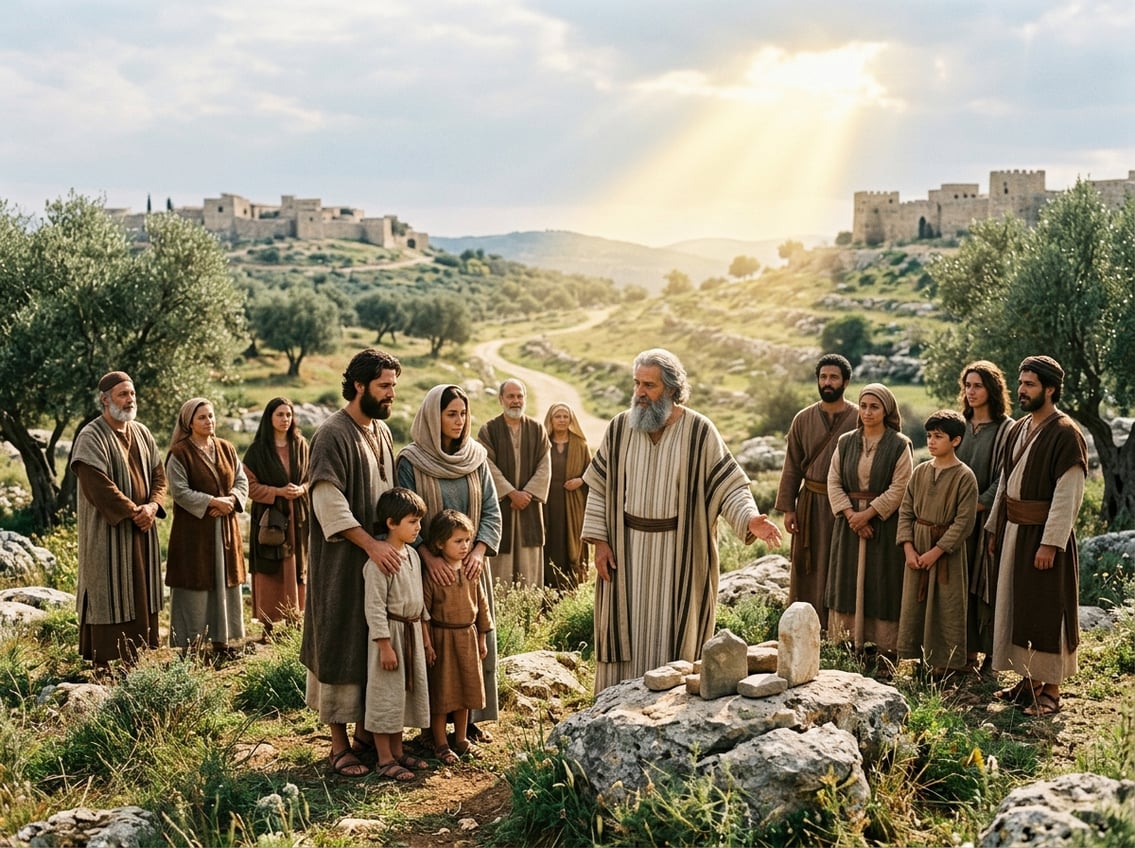
The Meanings of Israel in Scripture
The name Israel carries several layers of meaning in the Bible, from a personal name change to a title for a nation and its people. Each use connects back to a covenant relationship with God.
Jacob's New Name and Its Meaning
Jacob received the name Israel after wrestling with a divine figure at Peniel, as recorded in Genesis 32:28. The name change marked a turning point in his life and identity.
Key facts about the name:
| Element | Detail |
|---|---|
| Hebrew form | Yisra'el (יִשְׂרָאֵל) |
| Common meaning | "God contends" or "he struggles with God" |
| Original name | Jacob, meaning "heel" or "one who follows" |
| Event | A night-long wrestling match with a divine being |
| Location | Peniel, following Jacob's return to Canaan |
The name reflects a person who struggles with God and prevails. It was later confirmed again at Bethel, tying it directly to God's covenant with Jacob.
The Descendants of Jacob and the Twelve Tribes
Jacob had twelve sons. Each son became the head of a tribe, and together these tribes formed the nation known as the children of Israel.
The twelve tribes:
- Reuben
- Simeon
- Levi
- Judah
- Dan
- Naphtali
- Gad
- Asher
- Issachar
- Zebulun
- Joseph (later split into Ephraim and Manasseh)
- Benjamin
The descendants of Jacob multiplied in Egypt and later formed the nation of Israel under Moses. The term "all Israel" often refers to this full community across all twelve tribes, united by shared ancestry and a common covenant relationship with God.
Israel as the Northern Kingdom
After King Solomon's death, the united kingdom of Israel split into two separate kingdoms. This division changed how the name Israel was used in Scripture.
The split kingdoms:
| Kingdom | Tribes Included | Capital |
|---|---|---|
| Northern Kingdom (Israel) | Ten tribes | Samaria |
| Southern Kingdom (Judah) | Judah and Benjamin | Jerusalem |
The northern kingdom kept the name Israel, while the southern kingdom took the name Judah. This is also called the house of Israel in some prophetic books. The northern kingdom fell to Assyria in 722 BC, while Judah continued until it fell to Babylon later. After the exile, the name Israel was used again to describe the whole restored community.
Israel as a Covenant People
Beyond ethnic identity, Israel refers to a people bound to God through covenant. This covenant relationship shaped their laws, worship, and daily life.
Core elements of the covenant identity:
- Chosen status: God selected Israel to be his treasured possession, not based on their size or strength
- Mediatorial role: Israel was meant to represent God to other nations through obedience
- Worship structure: The tabernacle and later the temple served as the center for gathering and sacrifice
- Moral code: The Ten Commandments outlined expectations for the covenant people
- Inclusion of outsiders: Non-Israelites like Rahab and Ruth could join the covenant community through faith and commitment
This covenant framework meant that being part of Israel was about more than bloodline. It carried responsibilities tied to being God's people, called to live differently from surrounding nations as outlined in Exodus 19.
The Patriarchal Covenant and the Land Promise
God's covenant with the patriarchs set the terms for Israel's identity and its claim to land. This agreement passed from Abraham to his son and grandson, carrying specific promises about descendants and territory.
From Abram to Abraham, Isaac, and Jacob
The covenant began with a man named Abram, later renamed Abraham. God called him to leave his home and travel to a new land, promising to make him into a great nation.
The promise passed down through three generations:
| Patriarch | Role in the Covenant |
|---|---|
| Abraham | First to receive the promise from God |
| Isaac | Chosen heir over his brother Ishmael |
| Jacob | Renamed Israel; father of the twelve tribes |
Isaac inherited the covenant after Abraham, and Jacob inherited it after Isaac. Jacob's name change to Israel marked a turning point, since his twelve sons became the twelve tribes that formed the nation of Israel.
What the Abrahamic Covenant Promised
The Abrahamic Covenant appears in two key passages: Genesis 15 and Genesis 17. Each one adds detail to the same basic agreement.
The covenant included three main promises:
- Land: A specific territory for Abraham's descendants
- Descendants: Offspring as numerous as the stars
- Blessing: A relationship with God that would extend to other nations
In Genesis 17, God also introduced circumcision as a sign of the covenant. This physical mark set apart Abraham's male descendants as part of the agreement.
The covenant was largely unconditional. God made the promise as a grant, not as a deal requiring Abraham to meet certain conditions first.
Canaan, the Promised Land, and Biblical Boundaries
The land promised to Abraham was Canaan, the region later called the Land of Israel. This area roughly matches modern-day Israel and parts of the surrounding region.
Genesis describes the borders in broad terms, stretching from the Euphrates River to the border of Egypt. Numbers 34 gives a more detailed list of boundary markers, including the Jordan River as a key eastern border point.
Key boundary points included:
- The Euphrates River to the northeast
- The Jordan River as an eastern marker
- The Mediterranean Sea to the west
- The border of Egypt to the south
The promise did not stay with all of Abraham's descendants equally. Isaac received Canaan, while his brother Ishmael was promised land to the east. Jacob then inherited the same territory from Isaac, passing it to his twelve sons and their tribes.
Israel Formed Through Exodus and Sinai
Israel's identity as a nation began with a rescue from slavery and a covenant made at a mountain in the wilderness. These two events, the exodus and the giving of the law at Sinai, turned a group of tribes into a people with a shared purpose.
Deliverance From Egypt Under Moses
God freed the Israelites from slavery in Egypt through Moses. This event, called the Exodus, is the starting point for Israel as a nation.
Key facts about the Exodus:
- Moses led the Israelites out of Egypt after a series of plagues
- The people crossed the Red Sea to escape Pharaoh's army
- They traveled to the wilderness of Sinai after leaving Egypt
- The journey took them through Rephidim before reaching Sinai
The Exodus was more than a physical escape. It marked the point where the Israelites stopped being slaves and started becoming a distinct people with their own identity.
God reminded the people of this deliverance directly. He said he carried them "on eagles' wings" and brought them to himself (Exodus 19:4).
Law, Worship, and National Life
At Mount Sinai, God gave Moses the law. This included the Ten Commandments and other rules for daily life.
What the law at Sinai included:
| Category | Examples |
|---|---|
| Moral commands | No murder, no stealing, no false witness |
| Worship rules | Instructions for altars and sacrifices |
| Social laws | Rules about slaves, property, and injury |
| Civil justice | Payment for damages, fair treatment in disputes |
The law set up a system of justice for the community. It also created structure for worship, including instructions that later shaped the tabernacle and the Ark of the Covenant.
Sacrifices were part of this system too. They gave the Israelites a way to worship God and stay connected to the covenant.
This covenant at Sinai gave the nation a moral and legal foundation. It was not just about rules. It defined how the Israelites related to God and to each other.
After receiving the law, the Israelites spent years in the wilderness. Joshua later led them into Canaan, the land God had promised, continuing the story that began at Sinai.
A Holy People for the Nations
God gave the Israelites a specific role. He told them they would be "a kingdom of priests and a holy nation" if they kept the covenant (Exodus 19:5-6).
This meant Israel had a job beyond just their own survival. They were meant to represent God to other nations, including Gentiles who were outside the covenant.
What being "God's people" meant for Israel:
- They agreed to obey God's voice and keep his covenant
- They became his "treasured possession" among all nations
- Their identity was tied to holiness, not just ethnicity
- Their example was meant to point other nations toward God
This role set Israel apart from other ancient nations. Their laws, worship, and daily life were meant to reflect who God is, not just serve their own interests.
Kingdom, Division, Judgment, and Restoration
Israel moved through several major stages: a united kingdom, a split into two nations, conquest and exile, and promises of return. Each stage shaped how the Bible describes God's relationship with His people.
Saul, David, Solomon, and Jerusalem
Israel's first three kings set the pattern for the united kingdom.
| King | Key Actions | Result |
|---|---|---|
| Saul | First king, anointed by Samuel | Reign marked by disobedience and loss of favor |
| David | United the tribes, captured Jerusalem | Made Jerusalem the political and spiritual center |
| Solomon | Built the Temple in Jerusalem | Kingdom reached its greatest wealth and influence |
Samuel served as the prophet who anointed both Saul and David, connecting the priestly and prophetic roles to kingship.
The Temple gave Jerusalem lasting religious importance for the kingdom of Israel. Solomon's reign also planted the seeds of division through heavy taxation and forced labor.
Israel and Judah After the Split
After Solomon's death, the united kingdom broke into two separate nations.
- Northern Kingdom (Israel): Ten tribes, capital eventually settled in Samaria, first ruled by Jeroboam
- Southern Kingdom (Judah): Two tribes, capital remained Jerusalem, kept the Davidic royal line
Jeroboam set up alternate worship sites to keep people from returning to Jerusalem. This step introduced widespread idolatry into the northern kingdom of Israel.
Judah had a mix of faithful and unfaithful kings, including Manasseh and Amon, who both promoted idol worship. The split created two rival histories that the Bible tracks side by side.
Assyria, Babylon, and Exile
Both kingdoms eventually fell to foreign empires because of persistent idolatry and injustice.
| Kingdom | Conquering Empire | Approximate Outcome |
|---|---|---|
| Northern Kingdom (Israel) | Assyria | Population scattered, kingdom ended |
| Southern Kingdom (Judah) | Babylon (Babylonia) | Temple destroyed, people taken into exile |
The Assyrian conquest ended the northern kingdom permanently. Judah lasted longer but eventually faced the same fate under Babylon, including the destruction of the Temple in Jerusalem.
The exile forced Israelites to live outside their homeland for decades. This period tested their identity and their commitment to the covenant.
Prophetic Calls to Repentance and Hope
Prophets spoke both warning and hope during and after this period of judgment.
Warnings of judgment:
- Isaiah addressed pride and injustice in Judah
- Jeremiah warned of Babylon's coming conquest
- Hosea condemned idolatry using marriage as an image of broken loyalty
Messages of restoration:
- Ezekiel described a future return and renewal for Israel
- Daniel recorded visions pointing to eventual deliverance
- Multiple prophets promised a future king from David's line
The prophets consistently linked justice with covenant faithfulness. Restoration, in their message, depended on Israel returning to that standard rather than relying only on political power.
Israel, the Messiah, and the New Testament
The New Testament connects Jesus Christ directly to Israel's history and identity, showing him as the fulfillment of God's promises to the nation. It also expands the discussion of who belongs to God's people, raising questions about Jews, Gentiles, and the church that theologians still debate today.
Jesus Christ Within Israel's Story
The New Testament presents Jesus as tied to Israel's identity in several specific ways:
| Connection | New Testament Reference |
|---|---|
| Descendant of David | Matthew 1:1, Luke 1:32-33 |
| Fulfills messianic prophecy | Multiple Gospel citations of Old Testament texts |
| Called "King of the Jews" | Matthew 2:2, John 19:19 |
| Announces the Kingdom of God | Mark 1:14-15 |
Gabriel's announcement to Mary says Jesus will receive "the throne of his father David" and "reign over the house of Jacob forever." This links Jesus directly to Israel's national hopes rooted in the Davidic covenant.
Some writers describe Jesus as the true Israel, meaning he fulfills what Israel was called to do but did not fully accomplish.
The Gospel Extends to Jews and Gentiles
After Jesus' resurrection, the message about him moves beyond Jewish audiences.
Key moments in this expansion:
- Acts 1: Jesus tells his disciples they will be witnesses in Jerusalem, Judea, Samaria, and to the ends of the earth.
- Acts 10: Peter visits Cornelius, a Gentile Roman soldier, and the Holy Spirit comes upon him and his household.
- This event shows that Gentiles can belong to God's people without first becoming Jewish.
Membership in the community that follows Jesus does not depend on ethnic background. Roman soldiers, Samaritans, and other non-Jews receive the same Holy Spirit that Jewish believers received.
This shift does not erase Jewish identity within the early church. Many early Jewish believers, including James, wrote to Jewish communities scattered outside Israel, as seen in James 1:1's address to the twelve tribes in dispersion.
Paul's Teaching on Israel and the Church
Paul writes extensively about the relationship between Israel and the church, particularly in Romans.
Paul's main points in Romans 9-11:
- Not all physical descendants of Israel are part of true Israel (Romans 9:6-8).
- God has not rejected his people permanently (Romans 11:1-2).
- Gentiles are grafted into Israel's tree like a wild branch (Romans 11:17-24).
- Paul states that "all Israel will be saved," pointing to a future turning of Jewish people to their Messiah (Romans 11:26).
Paul uses an olive tree image to describe this relationship. Jewish people are the natural branches; Gentile believers are branches grafted in from a wild tree. Paul warns Gentile believers not to boast, since they depend on the root, not the other way around.
This teaching keeps Israel's identity connected to God's ongoing plan while including Gentiles in that same plan through faith in Christ.
The Israel of God and Major Interpretive Views
Galatians 6:16 mentions "the Israel of God," a phrase that has produced different interpretations among Bible scholars.
Three major views on this phrase:
| View | Explanation |
|---|---|
| Church as new Israel | The church replaces or fulfills Israel's role; all believers, Jewish and Gentile, form God's people |
| Two distinct groups | Israel and the church remain separate, each with distinct promises |
| Believing remnant | The phrase refers specifically to Jewish Christians within the broader Galatian church |
Each view carries different implications for biblical theology and prophecy.
Those who hold that the church and Israel are two distinct peoples of God argue for separ
Biblical Israel and the Modern State
The Bible describes Israel as God's covenant people, tied to a specific land and promise. The modern state of Israel, founded in 1948, is a political nation, and Christians hold different views on how it connects to biblical Israel.
What Changed With the State of Israel in 1948
In 1948, Jewish leaders declared the modern state of Israel. This ended centuries where Jews lived scattered across many countries without their own nation.
The new state gave Jews a home with borders, a government, and an army. This was a political event, not a religious one described in the New Testament.
Some Christians see 1948 as fulfillment of biblical promises. Others say [mod
Frequently Asked Questions
The identity of Israel raises common questions about people, place, and covenant meaning. These questions cover Israel's origin, its use in Scripture, and how it connects to both ancient history and modern events.
Who is called Israel in the Bible?
The name Israel first belongs to Jacob, the patriarch whose name was changed after he wrestled with God in Genesis 32. After this event, his 12 sons became the heads of the 12 tribes of Israel.
Over time, the name grew to describe:
- Jacob himself as an individual
- The 12 tribes descended from his sons
- The united nation formed at Mount Sinai
- The kingdom ruled by David and Solomon
- The northern kingdom after Israel split into two kingdoms
Each use depends on the time period and context in Scripture.
Is Israel in the Bible a person, a people, or a place?
Israel refers to all three, depending on the passage. This dual meaning often confuses new Bible readers.
| Meaning | Example |
|---|---|
| A person | Jacob, renamed Israel in Genesis 32 |
| A people | The 12 tribes descended from Jacob's sons |
| A place | The land promised to Abraham, Isaac, and Jacob |
Genesis 32 introduces Israel as a person. Exodus and later books shift the focus to Israel as a nation of people. Old Testament land promises, such as those in Genesis 15, connect Israel to a specific geographic territory.
Who does God refer to as Israel in the Bible?
God calls the descendants of Jacob "Israel" throughout the Old Testament. This includes the 12 tribes, the united kingdom under Saul, David, and Solomon, and the divided kingdoms that followed.
God also describes Israel using specific terms:
- "My people" (Exodus 3:7)
- "A kingdom of priests" (Exodus 19:6)
- "A treasured possession" (Deuteronomy 7:6)
These titles show Israel's covenant relationship with God rather than just ethnic or political identity.
How does biblical Israel differ from modern Israel?
Biblical Israel refers to the ancient nation formed through God's covenant with Abraham, Isaac, and Jacob. Modern Israel is the political state established in 1948.
Key differences include:
- Government structure: Biblical Israel was ruled by judges, then kings; modern Israel operates as a parliamentary democracy.
- Borders: Ancient Israel's territory shifted based on conquest and covenant promises; modern Israel's borders are defined by 20th-century political agreements and conflicts.
- Religious practice: Biblical Israel centered worship on temple sacrifice; modern Israel includes secular and religious Jewish citizens, along with other faith groups.
Some Bible scholars connect modern Israel to biblical prophecy, while others view the two as separate historical and political realities.
Why is Israel important in the Bible?
Israel serves as the primary vehicle through which God reveals His covenant promises, gives the Law, and brings forth the Messiah. The nation's history demonstrates both God's faithfulness and the consequences of disobedience.
Israel's importance centers on several roles:
- Receiving God's law at Sinai (Exodus 19-20)
- Producing the line of King David (2 Samuel 7)
- Serving as the ancestral line for Jesus Christ (Matthew 1)
- Acting as a witness to surrounding nations about God's character
Without Israel's history, the New Testament's references to covenant, prophecy, and Messiah would lack their Old Testament foundation.