What Does Iniquity Mean in the Bible? Memory That Sticks
This term appears across both the Old and New Testaments to describe serious, repeated wrongdoing against God.
Posted by
 Eden
EdenRelated reading
Are Dinosaurs Mentioned in the Bible? A Retention Guide
The Bible does not explain how these creatures came to an end.
How Did Samuel Die in the Bible? Memory Science Guide
Samuel was buried at his own house in Ramah, the town connected to most of his life and work, according to the account of his death and burial in 1 Samuel 25.
How Did Saul Die in the Bible? Scripture Memory Method
The death of King Saul marks the end of Israel's first monarchy in the Old Testament.
TL;DR
- Iniquity means a deep, ongoing pattern of wrongdoing, not just a single mistake or slip-up.
- The Bible uses iniquity to describe sin that becomes rooted in a person's character or actions over time.
- Iniquity differs from other biblical words for wrongdoing, like transgression or sin, in its focus on moral corruption.
- Understanding iniquity helps explain how the Bible describes a person's relationship with God and the need for forgiveness.
- This term appears across both the Old and New Testaments to describe serious, repeated wrongdoing against God.
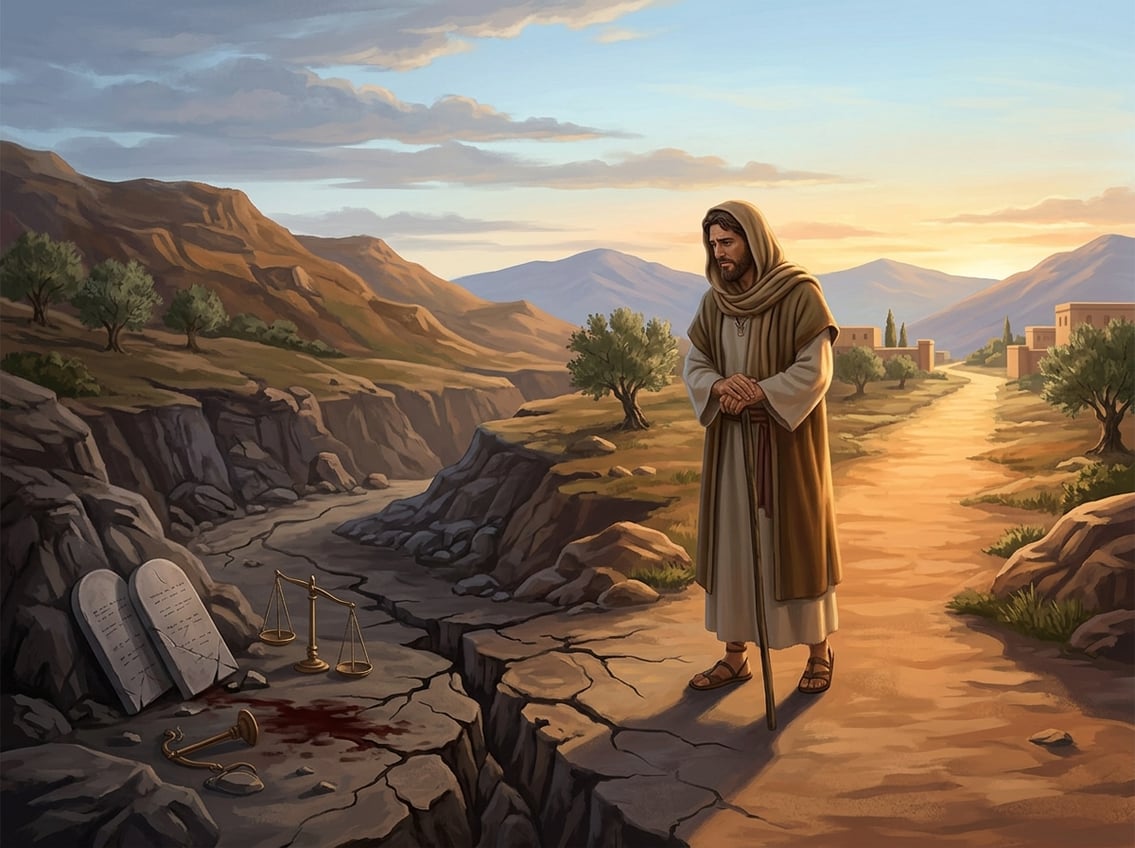
Core Meaning: Crookedness, Guilt, and Moral Corruption
Iniquity describes a state of moral crookedness that separates a person from righteousness. The concept covers three connected ideas: a bent or twisted condition, the guilt that results from it, and the wrongdoing itself.
The Hebrew Word Avon and Its Range of Meaning
The Hebrew term avon is the most common word translated as iniquity in the Old Testament, appearing over 200 times.
Avon carries three related meanings depending on context:
| Meaning | Example Use |
|---|---|
| The act of wrongdoing | A sinful action itself |
| The guilt tied to that act | The weight of responsibility for sin |
| The punishment that follows | Consequences for the wrong done |
These meanings often overlap in a single verse. A reader may see one Hebrew word used to mean the sin, the guilt, and the penalty all at once.
This flexibility is why English translations sometimes render avon as "iniquity," other times as "guilt," and other times as "punishment."
Perversity and the Image of What Is Crooked
At its root, avon comes from a verb meaning "to bend" or "to make crooked." This gives iniquity its core sense of perversity: a moral path that has been twisted away from what is straight and right.
The image is physical before it is spiritual. Something crooked does not line up with a standard.
In the same way, iniquity describes a heart or action that does not line up with God's standard of righteousness. This is different from a single mistake or accidental error.
Other Hebrew words reinforce this idea:
- Resha – describes wickedness or a wicked state
- Ra – describes evil in a general or moral sense
Together, these terms paint iniquity as a settled condition, not a passing lapse.
Why Iniquity Can Describe Both Wrongdoing and Its Guilt
Iniquity functions differently from simple sin because it includes the guilt attached to the act, not just the act itself.
Key distinctions:
- Sin (chattath) – often means "missing the mark," a specific failure to hit a target of righteousness.
- Iniquity (avon) – describes the character of the action, including its moral corruption and the guilt it creates.
- Transgression (pesha) – involves crossing a known boundary or rebelling against authority.
This is why iniquity appears in phrases like "bear iniquity," which means carrying the guilt or penalty of a wrong act. Genesis 4:13 and Leviticus 26:41 both use this phrase to link the wrongdoing directly to its consequence.
The overlap between wrongdoing and guilt explains why iniquity in the Old Testament often signals unresolved moral failing rather than a single completed offense.
How Sin, Transgression, Trespass, and Lawlessness Relate
Sin, transgression, trespass, and lawlessness describe different angles of the same problem: a broken relationship with God's law. Each word adds a specific shade of meaning, but together they build a fuller picture of what wrongdoing looks like in Scripture.
Sin as Falling Short of God's Standard
The Hebrew word chata means "to miss the mark." It pictures an archer aiming at a target and failing to hit it.
Key verse: Romans 3:23 (New International Version) states, "For all have sinned and fall short of the glory of God."
This definition applies whether the failure is intentional or accidental. The point is the gap between God's standard and human action.
| Term | Core Meaning | Picture |
|---|---|---|
| Sin | Missing the mark | Archer missing a target |
Transgression as Rebellion Against a Known Boundary
Transgression carries a stronger sense than sin. It means crossing a line that a person already knows exists.
Where sin can happen without full awareness, transgression involves a clear boundary and a deliberate choice to cross it. This makes transgression closer to rebellion against God, since it assumes the person understood the rule and broke it anyway.
Example contrast:
- Sin: Missing a target without meaning to.
- Transgression: Stepping over a marked line on purpose.
Transgressions in Scripture often describe actions against God's law that were known in advance, not accidental mistakes.
Trespass, Lawlessness, and the New Testament Vocabulary
Trespass adds a relational layer. It pictures someone entering territory that does not belong to them, similar to walking onto another person's property without permission.
Lawlessness comes from the Greek word anomia, meaning "without law" or acting as if no law applies.
Key verse: 1 John 3:4 states, "Everyone who sins breaks the law; in fact, sin is lawlessness."
This verse in the New Testament links sin directly to lawlessness, showing that all sin ultimately rejects God's law in some way.
| Term | Language | Core Idea |
|---|---|---|
| Trespass | English/Latin roots | Entering forbidden territory |
| Lawlessness | Greek: anomia | Acting without regard for law |
Sin, transgression, trespass, and lawlessness overlap because they all describe departure from God's law, but each term highlights a different piece of that departure: missing a goal, crossing a line, invading space, or ignoring law altogether.
How Iniquity Takes Root and Spreads
Iniquity does not appear suddenly. It follows a pattern that starts with a private desire and can end in widespread harm, both to the individual and to a whole community.
Desire, Pride, and the Hardening of the Heart
Iniquity often begins with an unchecked desire in the heart, such as lust or pride.
| Stage | Description | Example |
|---|---|---|
| Desire | A wrong want takes hold | Lust or greed |
| Justification | The person excuses the desire | "It's not that bad" |
| Action | The desire becomes behavior | Sin is committed |
| Hardening | The heart resists correction | Conscience grows numb |
This progression matches the pattern in Romans 1, where God gives people over to a reprobate mind once they consistently reject His truth. A reprobate mind describes a conscience that no longer responds to guilt or correction, as explained in this breakdown of iniquity's biblical meaning.
Pride plays a key role because it convinces a person they don't need to change.
From Private Choices to Harmful Patterns
A single wrong choice can turn into a repeated pattern if it goes unchecked.
Common paths from private sin to lasting patterns:
- Immorality: A private compromise becomes an ongoing lifestyle.
- Adultery: One act of unfaithfulness can turn into a hidden habit.
- Idolatry: Trusting something other than God for security or comfort becomes routine.
The prophet Jeremiah described how the people repeated sin without shame, treating wrong behavior as normal. This matches what one source calls the way iniquity "spreads and accumulates" over time, as shown in this explanation of iniquity as a corrosive force.
Once a pattern forms, it becomes harder to recognize as wrong. Obedience and holiness are presented in Scripture as the correction to this drift, calling people back to a standard instead of a habit.
Personal and Collective Forms of Injustice
Iniquity does not stay private. It affects relationships and communities.
Personal iniquity often leads to:
- Violence against others
- Injustice in dealings with neighbors
- Broken trust in families and communities
Micah 2:1 warns those who plan evil in advance and act on it as soon as they have the power to do so. This shows iniquity as something planned, not just accidental.
The Israelites as a nation faced this same pattern. The prophet Ezekiel described how the people's collective sin led to national judgment, showing that iniquity can move from individual choices to shared consequences. This reflects a broader biblical pattern explained in this overview of iniquity's role in Scripture.
Biblical Portraits of Consequences and Accountability
The Bible shows iniquity's effects through real people and real events. These stories teach that sin brings judgment, but also that repentance opens a path to grace.
David, Bathsheba, and Psalm 51
King David's sin with Bathsheba shows how iniquity leads to guilt and the need for repentance.
Key Verses:
| Verse | Plain-English Meaning |
|---|---|
| Psalm 51:2 | David asks God to wash away his guilt and clean him from sin |
| Psalm 51:5 | David admits he was sinful from birth, showing sin's deep roots |
David wrote Psalm 51 after the prophet Nathan confronted him about his sin. He did not make excuses. Instead, he asked God for mercy and a clean heart.
This psalm shows a clear pattern:
- Sin exposed — Nathan names the wrong
- Guilt admitted — David owns his actions
- Mercy requested — David asks God to forgive
- Restoration sought — David asks for a new, clean spirit
This model still applies today. Owning sin honestly is the first step toward being made right with God, a theme explored further in this guide to iniquity's meaning.
Israel's Prophetic Warnings About Unfaithfulness
The prophets warned Israel again and again about the cost of turning from God.
Core Warning:
Isaiah 59:2 states that iniquity creates separation from God. Sin acts like a wall. It blocks the relationship between people and God.
Pattern Seen Throughout the Prophets:
- Israel breaks the covenant through idolatry or injustice
- A prophet delivers a warning
- The people ignore the warning
- Judgment follows, often through exile or defeat
- God offers restoration if the people return
This cycle repeats across many books, including Isaiah, Jeremiah, and Ezekiel. Each case reinforces the same idea: unfaithfulness leads to broken fellowship with God, but repentance can restore it. For more on how iniquity is treated in scripture, see this overview of iniquity's biblical roots.
The Flood and Sodom and Gomorrah
Two Old Testament events show what happens when sin becomes widespread and unchecked.
Genesis 6:5 (The Flood):
- States that human hearts were filled with evil
- Describes wickedness as constant, not occasional
- Leads directly to flood judgment on the earth
Sodom and Gomorrah:
- Cities marked by extreme wrongdoing
- Judged through direct divine action
- Used later in scripture as a symbol of severe consequence
Comparison Table:
| Event | Cause | Result |
|---|---|---|
| The Flood | Widespread evil (Genesis 6:5) | Flood judgment on all but Noah's family |
| Sodom and Gomorrah | Persistent, unchecked sin | Cities destroyed |
Both stories point to a larger biblical principle: divine judgment responds to unchecked iniquity. Romans 6:23 summarizes this idea directly, stating that the wages of sin is death, while the free gift of God is eternal life through Jesus Christ.
This same theme continues into Revelation, where final judgment is described as the ultimate form of accountability and justice.
Forgiveness, Atonement, and New-Life Transformation
Iniquity is not the end of the story in the Bible. Scripture shows a clear path from guilt to grace, built on God's mercy, Christ's sacrifice, and the daily work of repentance and renewal.
God's Mercy and Justice in the Old Testament
The Old Testament shows a God who is both fair and forgiving.
| Verse | What It Says |
|---|---|
| Exodus 34:7 | God forgives sin but still holds people accountable |
| Psalm 32:5 | Confessing sin leads to God's forgiveness |
| Psalm 103:12 | God removes sin "as far as the east is from the west" |
| Jeremiah 33:8 | God promises to cleanse and forgive iniquity |
Before Jesus, forgiveness came through animal sacrifice. Blood was required to cover sin, based on the belief that life is in the blood.
The Day of Atonement was the yearly event where a high priest offered sacrifices for the whole nation. This ritual, described in Leviticus 16, transferred the people's sins onto a scapegoat.
Christ's Atoning Work for Sin and Iniquity
Jesus Christ fulfilled what animal sacrifices could only point to.
Key facts:
- Isaiah 53 predicts a suffering servant who carries the sins of others
- Isaiah 53:5-6 says he was "pierced for our transgressions" and "the Lord has laid on him the iniquity of us all"
- Christ's death provided permanent atonement, unlike repeated animal sacrifices
- Romans 6:14 states believers are no longer under law but under grace
Paul taught that this shift changes how believers relate to sin. Grace, not the law, becomes the ruling force in a believer's life.
The result is redemption and salvation. Through Christ Jesus, forgiveness is complete r
Frequently Asked Questions
The questions below cover common points of confusion about iniquity, including how it differs from sin and transgression, real biblical examples, and how the term appears in the King James Version.
What is the difference between sin, iniquity, and transgression in the Bible?
Each word describes a different level or type of wrongdoing in Scripture.
| Term | Core Meaning | Example |
|---|---|---|
| Sin | Missing the mark; general wrongdoing | Failing to do what is right (James 4:17) |
| Trespass | Crossing a line, intentional or not | Peter denying Jesus (Luke 22:34, 56-62) |
| Transgression | Willful, intentional disobedience | Samson breaking his vow (Judges 16:17) |
| Iniquity | Premeditated, ongoing sin without repentance | David's actions with Bathsheba and Uriah (2 Samuel 11:3-4) |
This breakdown of sin, transgression, and iniquity shows that iniquity is the most deeply rooted term, often describing a pattern rather than a single act.
What are examples of iniquity in the Bible?
Scripture gives specific cases where iniquity is named directly:
- David and Bathsheba – David planned to have Uriah killed after committing adultery (2 Samuel 11:3-4; 2 Samuel 12:9).
- Sons of Eli – Eli's sons continued in wrongdoing without repenting, leading to God's judgment (1 Samuel 3:13-14).
- Nations under judgment – A "cup of iniquity" fills up over time, describing nations that fully reject God (Revelation 17:4; Genesis 15:16).
- Those who plot evil – Micah 2:1 describes people who plan wrongdoing in advance and then act on it.
What does God consider to be iniquity?
Based on biblical usage, God identifies iniquity through these markers:
- A choice made ahead of time, not a reaction.
- Continuing in wrongdoing without turning back.
- A pattern that builds up over time rather than a one-time act.
- Actions that grow out of guilt already present in the heart (Micah 2:1).
The Hebrew word avon carries the sense of guilt and a bending away from what is right, which lines up with these patterns.