Who Was the Oldest Person in the Bible? Facts That Stay
His story sits within the genealogy that connects Adam to Noah in the Book of Genesis.
Posted by
 Eden
EdenRelated reading
Are Dinosaurs Mentioned in the Bible? A Retention Guide
The Bible does not explain how these creatures came to an end.
How Did Samuel Die in the Bible? Memory Science Guide
Samuel was buried at his own house in Ramah, the town connected to most of his life and work, according to the account of his death and burial in 1 Samuel 25.
How Did Saul Die in the Bible? Scripture Memory Method
The death of King Saul marks the end of Israel's first monarchy in the Old Testament.
TL;DR
- Methuselah is the oldest person in the Bible, living 969 years according to Genesis 5:27.
- His age places him at the top of a list of long-lived patriarchs recorded before the flood, including Jared, Noah, and Adam.
- The phrase "as old as Methuselah" is still used today to describe extreme old age or human longevity.
- Genesis does not explain why these figures lived so long, and scholars offer different views on the numbers.
- His story sits within the genealogy that connects Adam to Noah in the Book of Genesis.
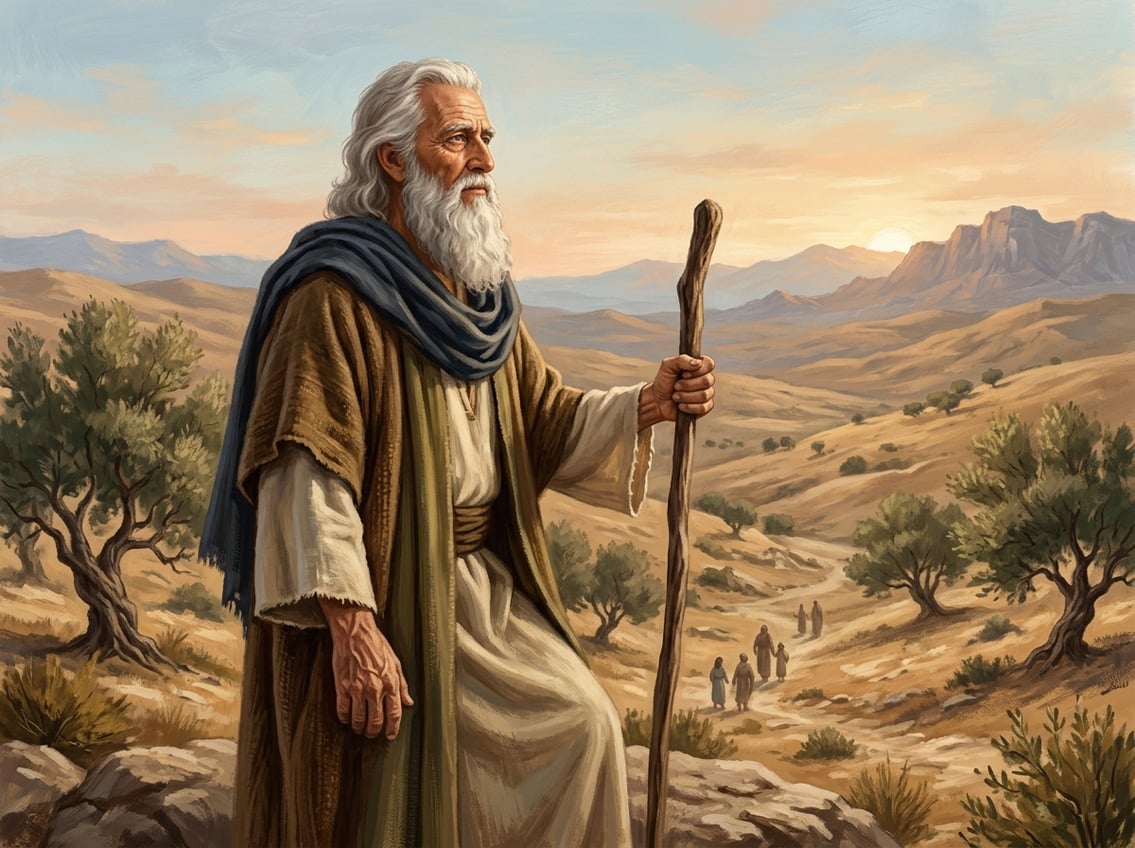
Methuselah's Biblical Record
Methuselah holds a specific place in the Book of Genesis as the person with the longest recorded lifespan. His record appears in a short genealogy passage, but it carries weight for readers tracking the oldest people in the Bible.
The 969-Year Lifespan in Genesis 5:27
Genesis 5:27 gives the exact figure: Methuselah lived 969 years.
Key details from the text:
| Detail | Value |
|---|---|
| Total lifespan | 969 years |
| Age at birth of Lamech | 187 years |
| Years lived after Lamech's birth | 782 years |
| Bible reference | Genesis 5:27 |
No other figure in the biblical genealogies is given a longer number of years. The verse states plainly that "all the days of Methuselah were nine hundred sixty-nine years, and he died."
This number is not repeated or expanded elsewhere in Genesis 5. It stands as the closing detail of his genealogical entry.
His Place Between Enoch, Lamech, and Noah
Methuselah sits at a fixed point in a four-generation chain:
- Enoch — Methuselah's father, taken by God without dying, according to Genesis 5:24
- Methuselah — lived 969 years, the longest span recorded
- Lamech — Methuselah's son, born when Methuselah was 187
- Noah — Methuselah's grandson, born to Lamech
This makes Methuselah both the son of Enoch and an ancestor of Noah. The Genesis 5 genealogy links these names directly, with each birth year marking the start of the next entry.
The same lineage also appears outside Genesis. Methuselah is named once in 1 Chronicles 1:3 and once in Luke's Gospel, where Jesus' ancestry is traced back through this line to Adam.
Why Methuselah Is the Scriptural Record Holder
No other person in the Book of Genesis, or in the Bible as a whole, is assigned a higher age at death.
Comparison with nearby patriarchs:
- Enoch: 365 years (taken by God, did not die of old age)
- Methuselah: 969 years
- Lamech: 777 years
- Noah: 950 years
Methuselah's number exceeds each of these by a wide margin. This gap is why his name became shorthand for extreme age, seen in the common phrase "as old as Methuselah."
The record is tied to a specific detail in the flood narrative: Methuselah dies the same year the flood begins, based on the ages given in Genesis 5. No later figure in scripture is given a comparable lifespan, which keeps his 969 years as the fixed maximum in the biblical record.
The Longest-Lived People Listed in Scripture
Genesis 5 records ten men whose lifespans form the oldest people in the Bible, each linked by direct father-to-son descent from Adam to Noah. Most lived past 900 years, with one clear exception in the list.
The Top Ten Lifespans and Their References
| Rank | Name | Age at Death | Scripture Reference |
|---|---|---|---|
| 1 | Methuselah | 969 | Genesis 5:27 |
| 2 | Jared | 962 | Genesis 5:20 |
| 3 | Noah | 950 | Genesis 9:28–29 |
| 4 | Adam | 930 | Genesis 5:5 |
| 5 | Seth | 912 | Genesis 5:8 |
| 6 | Kenan (also called Cainan) | 910 | Genesis 5:14 |
| 7 | Enosh (also called Enos) | 905 | Genesis 5:11 |
| 8 | Mahalalel | 895 | Genesis 5:17 |
| 9 | Lamech | 777 | Genesis 5:31 |
| 10 | Enoch | 365 | Genesis 5:23 |
These ten men are known as the antediluvian patriarchs, meaning they lived before the flood.
Their overlapping lifespans mean several generations were alive at the same time. This chain of long life represents the longest recorded lifespans in scripture.
Why Enoch's 365 Years Is an Exception
Enoch's age stands out because it is far shorter than the others on the list.
- Typical patriarch age: 777–969 years
- Enoch's age: 365 years
- Difference: Enoch lived roughly half as long as the next-shortest life on the list (Lamech)
Genesis 5:24 explains why: "Enoch walked faithfully with God; then he was no more, because God took him away." Enoch did not die in the normal sense. Scripture says God took him directly, without a recorded death.
This event is unique among the ten patriarchs listed in Genesis 5. No other name on the list includes this kind of departure.
Shem and the Post-Flood Comparison
Shem, Noah's son, lived 600 years according to Genesis 11. His lifespan marks a shift once the flood narrative shifts into a new phase of the genealogy.
| Category | Pre-Flood Range | Post-Flood Example |
|---|---|---|
| Typical age | 777–969 years | 600 years (Shem) |
| Trend | Ages generally increase toward 900+ | Ages begin a gradual decline |
Genesis 11 lists Shem's descendants with lifespans that continue to shorten with each generation. This pattern marks a clear break from the extreme longevity recorded in Genesis 5.
The Family Line From Adam to Noah
The genealogy from Adam to Noah traces ten generations through a single patrilineal line, recorded in Genesis 5. Each name in this chain connects the first man to the ancestors of Abraham, forming the backbone of biblical chronology.
The Sethite Line in Genesis 5
Genesis 5 lists the descendants of Adam through his son Seth, not Cain, since Cain and Abel do not appear in this specific line. Abel was killed by Cain, and Seth became the son through whom the godly lineage continued.
| Generation | Name | Age at Death |
|---|---|---|
| 1 | Adam | 930 |
| 2 | Seth | 912 |
| 3 | Enosh | 905 |
| 4 | Kenan | 910 |
| 5 | Mahalalel | 895 |
| 6 | Jared | 962 |
| 7 | Enoch | 365 (taken by God) |
| 8 | Methuselah | 969 |
| 9 | Lamech | 777 |
| 10 | Noah | 950 |
Methuselah holds the record for the longest lifespan in the Bible, dying at 969 years old. Enoch stands out because he did not die; the text says God took him after 365 years.
Genealogies in 1 Chronicles and Luke 3
Two other biblical books repeat this same line, confirming its accuracy across different eras of writing.
1 Chronicles 1 opens with a condensed list:
- Adam, Seth, Enosh
- Kenan, Mahalalel, Jared
- Enoch, Methuselah, Lamech, Noah
Luke 3, part of the Gospel of Luke, reverses the order and traces Jesus' ancestry backward through this same chain, all the way to Adam. This placement matters because it links the New Testament directly to the earliest Old Testament genealogy.
| Source | Direction | Purpose |
|---|---|---|
| Genesis 5 | Forward (Adam to Noah) | Establishes original genealogy |
| 1 Chronicles 1 | Forward (Adam to Noah) | Confirms and summarizes the record |
| Luke 3 | Backward (Jesus to Adam) | Links Jesus to Adam's line |
From Noah's Family to Abraham
After the flood, the genealogy continues through Noah's son Shem. This second line, found in Genesis 11, moves from Shem to Abraham over ten more generations.
Key names in the Shem-to-Abraham line:
- Shem
- Arphaxad
- (several generations later) Nahor
- Terah
- Abraham
Lifespans drop sharply after the flood. Noah's descendants lived several hundred years, but by the time of Abraham, ages had fallen to around 175 years. This decline sets up a clear pattern: the pre-flood patriarchs lived far longer than those who came after.
Enoch, Noah, and the Flood Narrative
Enoch's disappearance from earth and Noah's survival of the flood connect directly to Methuselah's story, since Methuselah stood between these two men in the biblical family line. Genesis 5 and the flood account in Genesis 6-7 set the timeline for understanding how Methuselah's life and death fit into this larger narrative.
Enoch Walked With God and Was Taken
| Reference | What It Says |
|---|---|
| Genesis 5:24 | Enoch walked with God, and he was not, for God took him |
| Hebrews 11:5 | By faith Enoch was taken up so that he would not see death |
| Jude 1:14 | Enoch prophesied about the coming judgment |
Enoch was Methuselah's father. He is one of only two people in the Bible who did not die a normal death.
Instead of dying, Enoch was taken to heaven directly by God. The phrase "walked with God" appears twice in Genesis 5:22-24 to describe his life.
This phrase signals a close, obedient relationship with God. Genesis gives no other person this exact description before Enoch. Later Jewish writings, including the Book of Enoch and Book of Jubilees, expand on Enoch's story, though these texts are not part of the standard biblical canon.
Noah's Righteousness and the Ark
Noah was Methuselah's great-grandson through Lamech. Genesis 6 describes Noah as righteous and blameless among the people of his time.
Key facts about Noah and the flood:
- God told Noah to build an ark before the flood came (Genesis 6:14)
- The ark held Noah, his wife, his three sons, and their wives (Genesis 7:13)
- Pairs of animals entered the ark to survive the flood (Genesis 6:19-20)
- The flood came in Noah's 600th year (Genesis 7:11)
Noah's righteousness set him apart from the rest of a corrupt world. Genesis 6:5-8 explains that human wickedness led God to send the flood, but Noah found favor because of his obedience.
This obedience led to his family's salvation. The ark became the means of survival for both Noah's family and the animals aboard.
What the Timeline Does and Does Not Say About Methuselah's Death
What the Bible timeline shows:
| Event | Year (Masoretic Text) |
|---|---|
| Lamech dies | 1651 |
| Methuselah dies | 1656 |
| Flood begins | 1656 |
Methuselah died the same year the flood began. This detail comes directly from calculating the ages listed in Genesis 5 and 7:11.
What the Bible does not say:
- It does not state that Methuselah's death caused the flood
- It does not explain a direct link between his death and God's timing
- It does not confirm how he died or the exact number of days before the flood
Some readers connect Methuselah's death to God's patience running out before judgment came. This idea is speculation, not a direct biblical statement.
Scripture only confirms that both events happened in the same year. Any explanation beyond that involves interpretation rather than clear textual proof.
How Readers Interpret the Extraordinary Ages
Readers approach Methuselah's 969 years and other patriarchal ages in Genesis 5 through several different lenses. These interpretations range from strict literalism to symbolic reading, and they often depend on which ancient text a reader consults and how that text compares to other ancient records.
Literal, Symbolic, and Literary Readings
Many readers within christian tradition treat the ages in Genesis as historical fact. This view holds that people in the pre-flood world simply lived much longer than people do today.
Other readers see the numbers as symbolic. They argue the ages point to the importance or status of these early figures rather than an exact count of years.
A few scholars suggest a literary purpose behind the numbers. The ages may follow patterns tied to genealogy structure or numerical symbolism common in ancient writing.
Common interpretations include:
- Literal reading: Ages reflect real years lived by real people.
- Symbolic reading: Ages represent honor or significance, not exact years.
- Literary reading: Ages follow structural patterns found in ancient genealogies.
Differences Between the Masoretic Text and Septuagint
The hebrew bible and its Greek translation do not always agree on the patriarchal ages. This creates a real challenge for anyone trying to build an exact biblical chronology.
The table below shows how the two textual traditions differ on a few key figures.
| Patriarch | Masoretic Text Age | Septuagint Age |
|---|---|---|
| Methuselah | 969 years | 969 years |
| Jared | 962 years | 962 years |
| Lamech | 777 years | 753 years |
The Septuagint often lists earlier ages at childbirth than the Masoretic Text. This shifts the overall timeline of events in Genesis, including the date of the flood.
Scholars still debate which text preserves the more original numbers. Neither version resolves the question on its own.
Ancient Near Eastern Chronology and the Sumerian King List
The sumerian king list records rulers who reigned for tens of thousands of years before a great flood. Some readers compare this list to Genesis 5 because both describe extreme lifespans before a flood event.
This comparison suggests that extended lifespans were a common idea across ancient Near Eastern cultures, not just in Hebrew tradition. However, the numbers in the Sumerian list are far larger than those in Genesis, and the two lists use different counting systems.
Some readers connect the shortened human lifespans after the flood to a water canopy that once surrounded the earth. Others link the change to god's original design for human life being altered by the consequences of sin, which introduced death and shorter lifespans into the world. This idea also appears in later reflections found in islam, where extended human lifespans in the early world are acknowledged as part of a broader account of human longevity before it declined.
Longevity, Mortality, and Lasting Biblical Themes
The Bible shows a clear pattern of shrinking lifespans after the flood, along with themes of sin, mortality, and hope that connect Genesis to the promise of eternal life through Jesus Christ.
The Decline in Lifespans After the Flood
Lifespans drop sharply after the flood recorded in Genesis.
| Figure | Approximate Age at Death | Timing |
|---|---|---|
| Methuselah | 969 years | Before the flood |
| Noah | 950 years | Spans flood era |
| Shem | 600 years | After the flood |
| Abraham | 175 years | Centuries later |
| Moses | 120 years | Later still |
Genesis 11 lists post-flood generations with steadily shorter lifespans. This decline suggests a shift in human life after the flood, though the Bible does not give one single reason for it.
Some link the change to sin's growing effect on the world. Others point to new conditions on earth after the flood. Either way, the pattern moves from near-1,000-year lives to lifespans closer to what people experience today.
From Abraham and Moses to Psalm 90
Abraham lived 175 years, a long life by later standards but far shorter than Methuselah's. Moses lived 120 years, and Deuteronomy notes his eyesight and strength stayed strong until the end.
Psalm 90:10 states that human life typically lasts 70 to 80 years, marked by "trouble and sorrow." This verse reflects the sharp drop from the ages seen in early Genesis.
Psalm 90:12 follows with a request: "teach us to number our days, that we may gain a heart of wisdom." Together, these verses shift the focus from counting years to using them well.
- Psalm 90:10 – Names a normal human lifespan.
- Psalm 90:12 – Asks for wisdom in light of that limit.
This shift marks a turning point. Scripture moves from recording extreme ages to teaching people how to live wisely within shorter ones.
Death, Eternal Life, and Hope in Jesus Christ
Death enters the Bible's story through sin, starting in Genesis. Every lifespan discussed, long or short, ends the same way: in death.
The New Testament answers this problem directly. Jesus Christ's resurrection offers a path to eternal life that does not depend on how long someone lives on earth.
Key connected ideas include:
- Sin and death – Introduced in Genesis, affecting all human life.
- Salvation – Made possible through Jesus Christ.
- Resurrection – Jesus Christ's rising from the dead, described in the Gospels.
- Eternal life – Offered to believers, replacing the focus on earthly years.
- God's mercy – Shown in providing a way past death.
This theme reframes long life. Instead of measuring worth by years lived, scripture points to eternal life as the lasting goal, reflecting God's original design for humanity before sin entered the picture.
Frequently Asked Questions
This section answers common questions about the o