Is Cremation a Sin in the Bible? Scripture Explained
Belief in the resurrection does not depend on how a body is handled after death.
Posted by
 Eden
EdenRelated reading
Are Dinosaurs Mentioned in the Bible? A Retention Guide
The Bible does not explain how these creatures came to an end.
How Did Samuel Die in the Bible? Memory Science Guide
Samuel was buried at his own house in Ramah, the town connected to most of his life and work, according to the account of his death and burial in 1 Samuel 25.
How Did Saul Die in the Bible? Scripture Memory Method
The death of King Saul marks the end of Israel's first monarchy in the Old Testament.
TL;DR
- The Bible does not directly forbid cremation, so cremation is not labeled a sin in scripture.
- Burial was the common practice in Bible times, but this reflects culture and custom, not a direct command.
- Some Bible stories link burning bodies to punishment, like the case of Achan in Joshua 7, but this does not mean cremation itself is sinful.
- Christian views on cremation vary, with some churches preferring burial and others accepting cremation as a personal choice.
- Belief in the resurrection does not depend on how a body is handled after death.
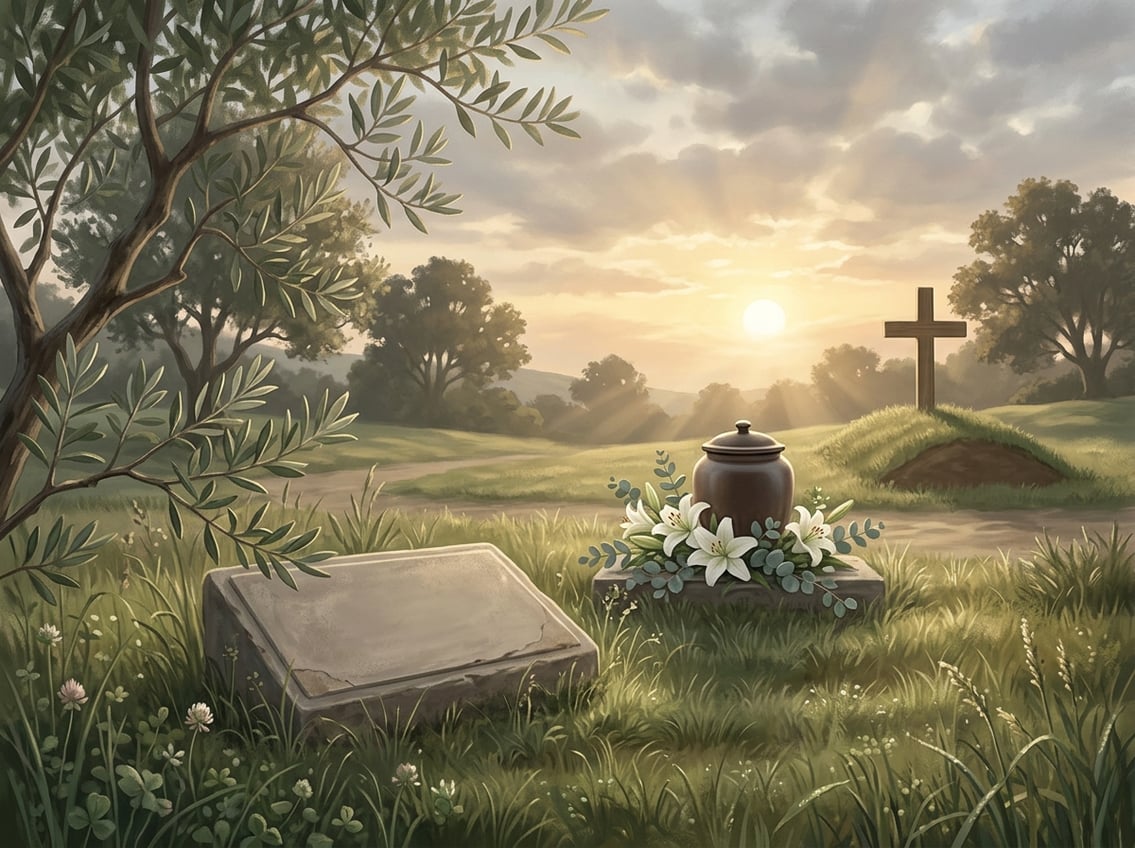
No Direct Biblical Prohibition
No single verse states that cremation is a sin. Scripture describes burial as common practice in both the Old Testament and New Testament, but it stops short of turning that custom into a binding command.
What Scripture Explicitly Commands
The Bible gives no direct scriptural command that requires burial or forbids cremation.
What Scripture actually addresses:
| Topic | Biblical Reference | What It Says |
|---|---|---|
| Burial as custom | Genesis 23:19, 35:19 | Describes patriarchs being buried |
| Burial of Jesus | Matthew 27:60-66 | Records His body placed in a tomb |
| Body disposal rules | None found | No verse legislates method |
- Old Testament writers record burial because it matched the culture of the time, not because God issued a rule.
- New Testament authors mention burial in narrative, not as instruction.
- No passage links body disposal method to salvation or righteousness.
Descriptive Accounts Versus Moral Rules
Many cremation references in Scripture describe events rather than issue moral commands.
Key distinction:
- Descriptive: A passage reports what happened.
- Prescriptive: A passage tells readers what they must do.
Examples:
| Passage | Type | Content |
|---|---|---|
| Leviticus 20:14 | Prescriptive (for a specific crime) | Burning as capital punishment for a sexual sin, not a general rule about death care |
| Amos 6:10 | Descriptive | Burning bodies during plague or siege conditions, mentioned in passing |
| 2 Kings 23:16-20 | Descriptive | Burning of bones tied to destroying corrupt altars, an act of judgment against idolatry |
None of these texts speak to how a believer's body should be handled after natural death.
Burning, Judgment, and Chosen Disposition
Biblical principles show a pattern: burning often appears tied to judgment or punishment, not personal choice.
- Leviticus 20:14 ties burning to a criminal penalty.
- 2 Kings 23:16-20 ties burning to destroying evidence of false worship.
- Amos 6:10 ties burning to crisis conditions, not standard practice.
By contrast, Saul's burning in 1 Samuel 31 was a voluntary act by others honoring him after death, not a punishment.
This contrast matters. Scripture treats forced or punitive burning differently from a chosen method of handling remains. Because the Bible never labels voluntary cremation as sin, the decision falls under personal conviction rather than direct command.
Burial as the Biblical Pattern
Burial was the standard practice throughout biblical times, appearing consistently from the patriarchs to the New Testament. The following examples show how burial customs shaped Israelite culture and Christian burial traditions.
Patriarchs and Family Tombs
Abraham set the pattern for burial in the Bible when he purchased the Cave of Machpelah to bury his wife Sarah.
Genesis 23:19 records this purchase in detail. This cave became a family tomb used across generations.
- Abraham was buried there
- Sarah was buried there
- Isaac was buried there
- Jacob was buried there
Joseph asked that his bones be carried out of Egypt and buried in the family land, showing how important burial in ancestral ground was to the Israelites. This practice reflected a belief in family continuity and respect for the dead that carried through later Jewish and Christian burial practices.
Israelite Burial Customs
Burial was the normal way Israelites handled the dead. Bodies were placed in tombs, caves, or family burial sites rather than left exposed or destroyed by fire.
2 Chronicles 16:14 describes King Asa's burial, which included spices and a bed prepared according to custom. This shows burial was often marked with care and preparation, not treated as a simple disposal method.
Quick facts about Israelite burial:
- Burial usually happened the same day as death
- Family tombs were reused across generations
- Spices and burial cloths were common
- Burial outside the land was seen as a dishonor
These customs formed the cultural background for later Christian burial practices.
Jesus' Burial and the New Testament Witness
The New Testament follows the same burial pattern seen in the Old Testament. Matthew 27:60-66 describes how Jesus was placed in a tomb, sealed with a stone, and guarded.
This account matters for two reasons. First, it confirms burial as the accepted practice in first-century Judea. Second, it connects burial directly to the resurrection story, which shapes how many Christians view traditional burial today.
Many Christians point to this passage as evidence that Christian burial practices should reflect the example set by Jesus' own burial. The tomb, the stone, and the eventual empty tomb are central to Christian teaching about death and resurrection.
Saul and His Sons at Jabesh-Gilead
1 Samuel 31 describes an exception to the usual pattern. After Saul and his sons died in battle, the Philistines displayed their bodies on a city wall.
1 Samuel 31:8-13 explains what happened next. Men from Jabesh-Gilead traveled through the night to recover the bodies. According to 1 Samuel 31:11-13, they burned the bodies, then buried the bones under a tamarisk tree and fasted for seven days.
This case is often cited in discussions about cremation because it shows fire used in a burial context. However, most scholars note this was a response to mutilation, not a normal Israelite practice. The final act was still burial of the bones, which fits the broader biblical pattern.
Resurrection and the Meaning of the Body
The Christian hope of resurrection rests on God's power, not on the physical condition of a body after death. Scripture teaches that the soul, spirit, and body all matter, but no method of burial changes God's ability to raise the dead.
Why Ashes Do Not Limit God's Power
God's power to resurrect does not depend on the state of physical remains.
Key Scripture References:
| Verse | Meaning |
|---|---|
| John 11 (Lazarus) | God can restore life even after death and decay |
| Job 34:14-15 | Life and breath return to dust; God controls this process |
| 1 Thessalonians 4:16 | The dead in Christ will rise at God's command |
Bodies decay in graves, get lost at sea, or turn to ash through fire. None of these conditions stop God's power to resurrect.
Job 34:14-15 shows that all flesh returns to dust regardless of how death occurs. This matches the burial language "dust to dust, ashes to ashes."
Lazarus had already begun to decay in John 11, yet Jesus raised him. This shows physical decay does not block resurrection.
Paul's Teaching on the Resurrection Body
Paul addresses resurrection directly in 1 Corinthians 15:35-58.
Core Teaching Points:
- The resurrection body is not identical to the earthly body
- Paul compares it to a seed that changes form when it grows
- The new body is described as spiritual and imperishable
- Human tissue does not need to be preserved for resurrection to happen
| Old Body | New Body |
|---|---|
| Perishable | Imperishable |
| Weak | Powerful |
| Natural | Spiritual |
This passage explains that resurrection involves transformation, not simple reconstruction of the same physical matter. The resurrection body described in 1 Corinthians 15 is a new creation, not a repaired version of the old one.
This teaching applies equally to bodies that decayed naturally and those reduced to ashes through cremation.
Respect for the Body Without Fear
The human body still deserves honor, even though cremation does not prevent resurrection.
Reasons for Reverence:
- The body is called a temple of the Holy Spirit in 1 Corinthians 6:19
- The body served as the physical presence of a person's life on earth
- Respectful treatment reflects care for someone made in God's image
What This Does Not Mean:
- It does not mean cremation shows disrespect
- It does not mean burial is required for resurrection
- It does not mean the method of body disposal affects afterlife outcomes
Christians can choose burial or cremation based on personal conviction, family wishes, or practical circumstances. The decision reflects reverence for the body without introducing fear about resurrection.
How Christian Traditions Approach Cremation
Christian traditions differ on cremation, but the disagreement is mostly about custom and symbolism rather than direct biblical command. Attitudes range from historic caution to modern acceptance, with most denominations today leaving the decision to personal conscience.
Why Historic Christians Often Preferred Burial
Early Christians largely followed Jewish burial customs rather than the cremation practices common among Greeks and Romans.
Key reasons for this preference include:
- Respect for the body as something made in God's image
- Connection to resurrection hope, symbolized by burial and "sleeping" until Christ's return
- **Separation from pagan pract
Making a Reverent End-of-Life Decision
Choosing cremation or burial does not have to be a rushed choice. Families can honor a loved one's memory and their faith by thinking through a few key details ahead of time.
Considering Family Wishes and Funeral Plans
Talking with family before a death happens can prevent confusion later. Many people write down their wishes in advance so loved ones do not have to guess.
A funeral service or memorial service can happen with either cremation or burial. Some families choose a traditional service with a casket present, followed by cremation afterward. Others hold a memorial service after cremation has already taken place, using photos or a small urn instead of a casket.
Here are common questions to discuss as a family:
- Does the person want a traditional funeral service, a memorial service, or both?
- Should the body be present during the service, or is direct cremation preferred?
- Are there religious or cultural traditions the family wants to follow?
- Who will make final decisions if the wishes are not written down?
Cremation and Burial Options for Ashes
Once the cremation process is complete, families have several choices for the cremated remains. There is no single correct method, and each option can be done with respect and care.
| Option | Description |
|---|---|
| Burial in a cemetery plot | Ashes are placed in a small urn and buried in a burial plot, sometimes in the same plot as a family member |
| Columbarium | A structure with small compartments (niches) built to hold urns, often located at a cemetery or church |
| Mausoleum | An above-ground building where urns or caskets are placed in enclosed spaces |
| Scattering | Ashes are scattered in a meaningful location, following any local rules that apply |
| Keeping at home | An urn is kept by a family member as a personal keepsake |
Some families also choose to divide ashes between multiple family members or locations.
Costs, Care, and Final Resting Places
Cost is often a major factor in these decisions. Direct cremation, which skips embalming and a formal viewing, is usually the lowest-cost option. A traditional burial with embalming, a casket, and a cemetery plot tends to cost more.
Here is a general cost comparison:
| Service Type | What It Typically Includes | Relative Cost |
|---|---|---|
| Direct cremation | No embalming, no viewing, simple container | Lowest |
| Cremation with memorial service | Cremation plus a service, may include an urn | Moderate |
| Traditional burial | Embalming, casket, funeral service, cemetery plot | Highest |
Choosing a final resting place is also part of good stewardship. This means using time and money wisely while still honoring the person who died.
Families can ask a funeral home or cemetery for a written price list before making a decision. This helps avoid unexpected costs later and allows the family to choose an option that fits their budget and beliefs.
Frequently Asked Questions
Many readers ask direct questions about what the Bible says on this topic, what church leaders teach, and whether cremation affects a person's afterlife. The answers below focus on specific scripture references, church positions, and known teachings.
What does the Bible say about cremation?
The Bible does not give a direct command about cremation. It also does not forbid it.
| Bible Reference | What It Shows |
|---|---|
| Genesis 23:19 | Abraham buries Sarah |
| Genesis 35:19 | Rachel is buried near Bethlehem |
| 2 Chronicles 16:14 | A king is buried in a tomb |
| Matthew 27:60 | Jesus is buried in a tomb |
| 2 Kings 23:16-20 | Human bones are burned on an altar, which desecrates it |
Burial was the common practice in Bible times. But the text does not command burial as the only method for handling a body after death.