How Long Is a Generation in the Bible? Context That Sticks
Generations in the Bible appear roughly 119 times and can describe a family line, a historical era, or a group of people who share a common trait, not just an age range.
Posted by
 Eden
EdenRelated reading
Are Dinosaurs Mentioned in the Bible? A Retention Guide
The Bible does not explain how these creatures came to an end.
How Did Samuel Die in the Bible? Memory Science Guide
Samuel was buried at his own house in Ramah, the town connected to most of his life and work, according to the account of his death and burial in 1 Samuel 25.
How Did Saul Die in the Bible? Scripture Memory Method
The death of King Saul marks the end of Israel's first monarchy in the Old Testament.
TL;DR
- A biblical generation has no single fixed length; scripture uses the term to mean anywhere from 20 to 100 years, depending on the passage and context.
- The Hebrew word for generation, dor, can point to a lifespan, an age group, or a lineage marker, so the length of a biblical generation shifts based on how the word is used.
- Deuteronomy 1:35 and 2:14 treat one generation as 38 years, while Genesis 15:16 implies 100 years per generation when paired with the 400-year timeline in Exodus 12:40.
- Modern readers often default to a 20-to-30-year estimate for a biblical generation, matching common genealogical spacing between parent and child.
- Generations in the Bible appear roughly 119 times and can describe a family line, a historical era, or a group of people who share a common trait, not just an age range.
The Short Answer: No Single Biblical Number
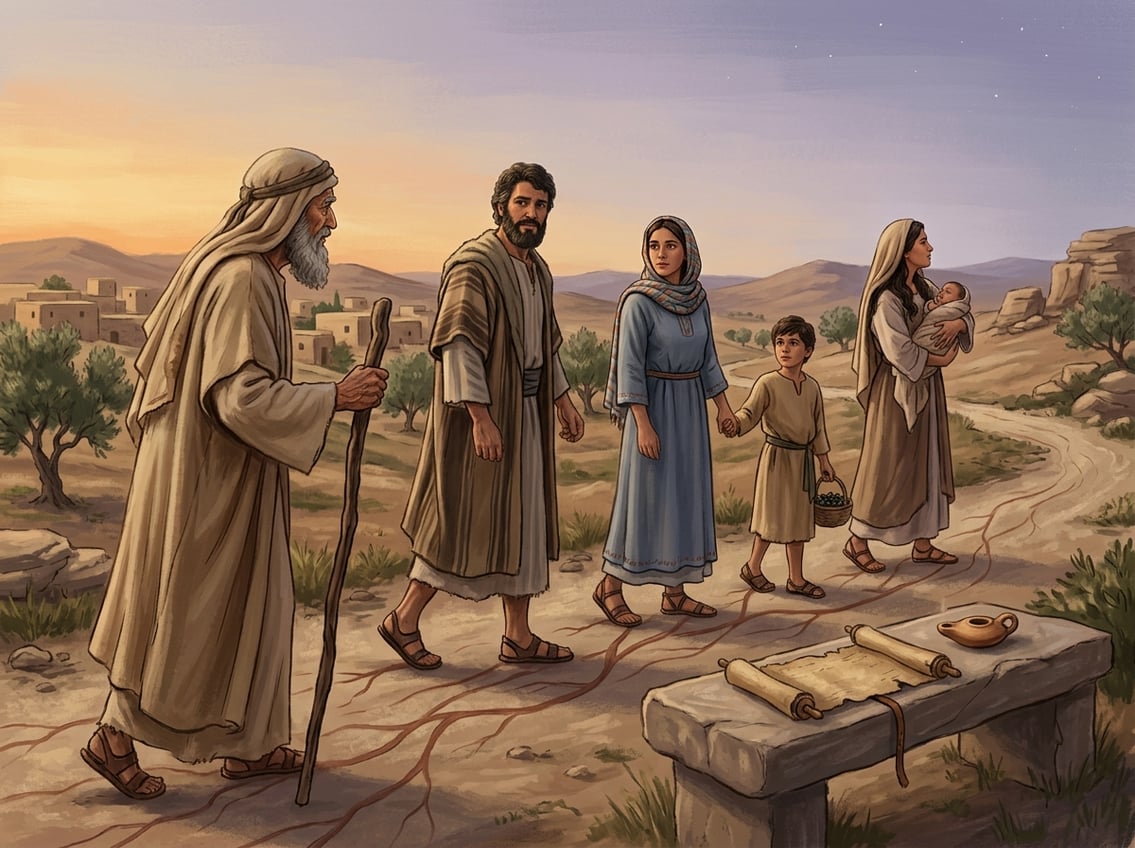
The Bible does not assign one fixed length to a generation. Depending on the passage, a biblical generation can mean anywhere from 20 years to more than 100 years, similar to how modern culture uses labels like generation x, millennials, gen z, and generation alpha to mark different time periods.
Why About 30 Years Is a Useful General Estimate
Thirty years is the number most often cited as a rough biblical average, based on the typical age gap between a parent and child.
| Estimate | Basis |
|---|---|
| ~30 years | Average age when a parent has a child |
| Modern parallel | Similar spacing used for generation x, millennial generation, and gen z labels today |
This estimate works well for tracing family lines, such as the genealogies in Genesis. The Hebrew word dor, discussed in how long a generation lasts in the Bible, can refer to a normal 30-year span or stretch to describe a broader group of people. It also appears in discussions of family lineage and historical periods tied to Scripture's timeline.
Why 40, 70 to 80, and Longer Periods Also Appear
Other passages use longer spans, since "generation" s
What "Generation" Means in Scripture
The word "generation" carries several meanings in the Bible, and the correct definition depends on the verse. Scripture uses it to describe people living at the same time, a family lineage, a moral or spiritual group, or a long stretch of human history.
People Living in the Same Era
This is the most common everyday use of "generation" in the Bible. It refers to everyone alive during a specific time period, regardless of family ties.
Matthew 24:34 uses this meaning when Jesus says "this generation will not pass away until all these things take place." He is talking about the people living during his lifetime, not his descendants.
This use appears often in both the Old Testament and New Testament. It groups people by their shared time on earth, similar to how modern speakers refer to "millennials" or "baby boomers."
Descendants and Family Lineage
The Bible also uses "generation" to track descendants through a family line. This meaning focuses on birth order and bloodline rather than a shared time period.
Matthew 1:17 lists the generations from Abraham to David to Jesus. Each named generation represents one link in the family lineage leading to Christ.
Genesis uses this same pattern with phrases like "the generations of Adam" in Genesis 5:1. This phrasing introduces a genealogical record, listing descendants one after another.
This use of the word connects directly to biblical culture, where family history and inheritance rights depended on accurate lineage records.
A Spiritual or Moral Type of People
"Generation" sometimes describes a group defined by shared beliefs or behavior, not by age or bloodline. This use labels people according to their spiritual condition.
1 Peter 2:9 calls believers "a chosen generation," a phrase that has nothing to do with age. It describes a spiritual identity shared across time.
Jesus also used this meaning in a negative sense, calling people "a wicked and adulterous generation" in Matthew 12:39. He was describing their moral character, not their birth year.
This type of generation can include people from different time periods who share the same spiritual traits, whether faithful or unfaithful.
An Extended Age or Historical Era
In some Old Testament passages, "generation" refers to a long period of time rather than a single age group. This use often overlaps with major stretches of human history.
Genesis 15:16 says Abraham's descendants would return to Canaan "in the fourth generation." Exodus 12:40 clarifies this span as 400 years, meaning each "generation" in this context equaled about 100 years, according to Easton's Bible Dictionary.
Deuteronomy 1:35 and 2:14 use a shorter measure, describing a generation as 38 years. These examples show that the word's length shifts based on the historical events being described, not a single fixed number.
This flexible use appears mainly in passages that track future generations or long periods tied to covenant promises, such as land inheritance or national growth.
Key Timeframes Found in Biblical Passages
The Bible gives specific number of years in a few key passages, but these numbers describe unique historical events rather than a fixed formula for every generation.
The Wilderness Generation and Its 40 Years
The wilderness generation spans exactly 40 years, tied to Israel's journey after leaving Egypt.
| Reference | Detail |
|---|---|
| Numbers 32:13 | God made the Israelites wander 40 years until that generation died out |
| Cause | Refusal to enter the Promised Land after the report from the 12 spies |
| Exception | Joshua and Caleb, who trusted God, were allowed to enter |
Key facts:
- Moses led the Exodus but died before entering the Promised Land.
- Joshua later led the new generation into Canaan.
- This 40-year span marks one full life cycle for that specific group, not a universal generation length.
A Typical Lifetime in Psalm 90
Psalm 90:10 gives a lifespan estimate, not a generation length.
The verse states:
- 70 years as the normal span of life
- 80 years "if by reason of strength"
- Both numbers described as filled with "labor and sorrow"
This passage is often used in prayer and reflection on life's brevity. It measures individual lifespan, not the gap between parent and child.
Quick contrast:
| Concept | Timeframe | Source |
|---|---|---|
| Lifespan | 70–80 years | Psalm 90:10 |
| Wilderness generation | 40 years | Numbers 32:13 |
The Fourth Generation in Abraham's Promise
Genesis 15:16 links the term "generation" to roughly 100 years, based on Abraham's own lifespan pattern.
Key data points:
- God tells Abraham his descendants will return to Canaan "in the fourth generation."
- Exodus 12:40 records 400 years of Israelite bondage in Egypt.
- Dividing 400 years by four generations equals 100 years per generation.
This calculation reflects one specific case tied to Abraham's descendants, not a fixed rule applied elsewhere in scripture. It shows how God's promises can unfold across centuries rather than immediate fulfillment.
Why Genealogical Spans Cannot Be Converted Mechanically
Genealogies list ancestors, but they do not always record every single generation.
Reasons a fixed formula fails:
- Hebrew genealogies sometimes skip names to highlight key figures.
- Lifespans varied significantly between historical eras (compare Genesis figures to later Israelite kings).
- The word "generation" shifts meaning based on context: a family line, an age group, or a symbolic time period.
Comparison of generation types:
| Type | Example | Length |
|---|---|---|
| Historical event span | Wilderness journey | 40 years |
| Individual lifespan | Psalm 90 | 70–80 years |
| Ancestral promise span | Abraham to Exodus | ~100 years each |
Applying one fixed number across all biblical genealogies produces inaccurate timelines.
Hebrew and Greek Terms Behind the Translation
Three main words get translated as "generation" in the Bible: dor in Hebrew, toledot in Hebrew, and genea in Greek. Each word carries a different meaning, which changes how a reader should understand time spans, family lines, and groups of people in Scripture.
Dor: A Contemporary Group or Characterized People
Dor is the most common Hebrew word for "generation." It appears about 167 times in the Old Testament.
Dor does not point to a fixed number of years. Instead, it describes:
- People living at the same time — those who share an era, like "this generation."
- A group marked by shared traits — such as a "wicked generation" or "righteous generation."
- An ongoing succession — as in the phrase "from generation to generation," which points to continued history rather than one set period.
Genesis 15:16 uses dor to describe a 100-year span during the patriarchal age, showing that the word could stretch to fit longer lifespans in early biblical history.
Toledot: Origins, Records, and Family Histories
Toledot means "generations" in the sense of family records or origin stories. It works as a structural marker that divides Genesis into sections.
| Reference | Toledot Phrase | What It Introduces |
|---|---|---|
| Genesis 2:4 | Generations of the heavens and the earth | Creation account details |
| Genesis 5:1 | Generations of Adam | Adam and Eve's family line, including Seth |
| Genesis 11:10 | Generations of Shem | Line from Shem to Terah, tied to the Semites |
| Genesis 11:27 | Generations of Terah | Abram, plus mentions of Ishmael and Isaac |
| Genesis 25:12 | Generations of Ishmael | Ishmael's descendants |
| Genesis 25:19 | Generations of Isaac | Isaac's family line |
Toledot connects family history after the Fall through figures like Noah and forward to Exodus 1:6, where the death of Joseph and his brothers closes one family record and opens the next stage of Israel's story.
Genea: Lineage, Contemporaries, and Shared Identity
Genea is the main Greek word for "generation" in the New Testament. Matthew 24:34 uses it in Jesus' statement, "this generation shall not pass," pointing to people alive at one specific time.
Genea carries three main uses:
- Contemporaries — people living in the same time period.
- Lineage or descent — a family line traced through ancestry.
- Shared identity or character — a group defined by common behavior, such as "a wicked generation."
The Greek term genea keeps some of the older meaning found in the Hebrew word dor, carrying the sense of a "circuit" or "period" of time rather than one exact length.
Genealogies, Covenants, and God's Long-Term Purposes
Biblical genealogies do more than list names. They show how God kept His promises across many generations, from Abraham to Jesus Christ.
From Abraham to David and the Exile
The Bible traces a clear line of descendants from Abraham to King David. This line shows how God's covenant promises passed from one generation to the next.
Key stages in this lineage:
- Abraham receives God's covenant promise (Genesis 12:2-3)
- The promise passes to Isaac, then Jacob
- Jacob's sons form the twelve tribes of Israel
- David rises as king, continuing the covenant line
- The Babylonian captivity disrupts the nation but not the promise
Each generation acted as a link. The genealogies confirmed that God kept His word even through hardship, including exile.
Matthew's Three Sets of Fourteen Generations
Matthew 1:17 organizes Jesus' family history into three groups of 14 generations each. This structure helps readers see the full scope of the lineage at a glance.
| Group | Time Period | Generations |
|---|---|---|
| 1 | Abraham to David | 14 |
| 2 | David to the Babylonian exile | 14 |
| 3 | Exile to Christ | 14 |
This pattern in Matthew 1:17 was likely a memory aid for early readers. It also linked Jesus to two major turning points in Israel's history: the rise of King David and the Babylonian exile.
The Genealogy of Jesus and the Fulfillment of Promise
The genealogy of Jesus in Matthew 1 and Luke 3 connects Him directly to Abraham and David. This fulfills earlier promises that the Messiah would come from David's line.
What this genealogy shows:
- Jesus is a real, historical person with a traceable family line
- His birth fulfills specific Old Testament promises
- The line runs through both triumph (David's kingship) and failure (the exile)
This record served as proof that Christ was the promised one.
Reading "This Generation" in Jesus' Teachings
Jesus used the phrase "this generation" several times, and each use points to a specific audience or warning. Understanding these verses side by side helps clarify what Jesus meant and how the phrase connects to Old Testament language about disobedient people.
The Immediate Audience in the Gospels
Jesus spoke directly to the people standing in front of him when he used the phrase "this generation."
| Verse | Reference | Plain-English Meaning |
|---|---|---|
| "To what shall I compare this generation?" | Matthew 11:16 | Jesus compares the crowd's reactions to children who won't play along with games. |
| "An evil and adulterous generation seeks for a sign." | Matthew 12:39 | Jesus rebukes the people asking for proof despite already seeing miracles. |
| "O faithless and twisted generation." | Matthew 17:17 | Jesus expresses frustration at the disciples' lack of faith. |
| "This generation will not pass away until all these things take place." | Matthew 24:34 | Jesus tells his listeners that certain events will happen within their lifetime. |
| "Save yourselves from this crooked generation." | Acts 2:40 | Peter urges his audience to separate from sinful behavior. |
| "In past generations he allowed all the nations to walk in their own ways." | Acts 14:16 | Paul reminds listeners that God once let nations follow their own paths before revealing himself more fully. |
Warnings About a Resistant Generation
Jesus often directed these warnings at specific groups who resisted his message.
- The Pharisees and scribes were common targets of Jesus' criticism for their strict rule-following without real faith.
- Jesus called out a wicked and perverse generation when people ignored clear evidence of his teaching.
- He described a stubborn and rebellious generation in a way that echoes older scripture.
This language borrows directly from the Old Testament:
- Psalm 78:8 describes Israel's ancestors as "a stubborn and rebellious generation."
- Isaiah 51:9 calls on God's power to act again as he did in the past against opposing forces.
Jesus used similar wording to link his audience's unbelief to Israel's long history of disobedience.
Matthew 24:34 and Prophetic Context
Matthew 24:34 sits inside a larger set of prophetic passages where Jesus answers questions about the temple's destruction and
Frequently Asked Questions
The length of a generation in the Bible changes based on the verse, the Hebrew word used, and the historical period. Below are quick answers to the most common questions about biblical generations.
How many years is a generation according to the Bible?
The Bible does not give one fixed number for a generation. The length depends on the passage and time period.
| Time Period or Passage | Generation Length |
|---|---|
| Abraham's era (Genesis 15:16) | 100 years |
| Wilderness wandering | 40 years |
| Deuteronomy 1:35, 2:14 | 38 years |
| Everyday use (parent to child) | About 30 years |
Most Bible teachers agree that a generation is roughly thirty years in normal, everyday use. This matches how people today think of a generation as the time between a parent and their child.
Where does the Bible say that a generation is 70 years?
The 70-year figure comes from Psalm 90:10. This verse describes a full human lifespan, not a family generation.
Key points about this verse:
- It says a person's life lasts "seventy years, or eighty if they have the strength."
- It refers to how long a person lives, not how long it takes for one generation to become parents to the next.
- Some readers confuse this with the family-generation length, but the context of Psalm 90 is about lifespan and mortality.
Is a biblical generation 40, 70, 80, or 100 years?
All four numbers appear in the Bible, but each one comes from a different context. This is why three people can give three different but correct answers to this question.
- 40 years: Length of the Israelites' time in the wilderness (Numbers 32:13).
- 70 years: Average human lifespan in Psalm 90:10.
- 80 years: Lifespan for those with unusual strength, also from Psalm 90:10.
- 100 years: Generation length during Abraham's time, based on the math in Genesis 15:16 and Exodus 12:40.
No single number applies to every use of the word "generation" in the Bible.
What does the Hebrew word for generation mean in the Bible?
The main Hebrew word for generation is dor (דּוֹר). This word has more than one meaning depending on how it is used.
Dor can mean:
- People who are alive at the same time.
- A group of people who share the same traits or beliefs.
- One step in a family line, such as father to son.
Because dor carries several possible meanings, readers need to check the surrounding verses to know which sense applies.
How long are 14 generations in biblical genealogy?
Matthew 1:17 groups the genealogy of Jesus into three sets of 14 generations. This is a literary pattern, not a strict math formula.
- From Abraham to David: 14 generations.
- From David to the Babylonian exile: 14 generations.
- From the exile to Christ: 14 generations.
Matthew skipped some names to make the pattern come out to 14 in each section. This means the actual number of years covered by "14 generations" is not fixed and cannot be used to calculate an exact number of years per generation.