What Does Righteous Mean in the Bible? A Memory Method
Memory verses on this topic work best when paired with plain-English meaning, not memorized in isolation.
Posted by
 Eden
EdenRelated reading
Are Dinosaurs Mentioned in the Bible? A Retention Guide
The Bible does not explain how these creatures came to an end.
How Did Samuel Die in the Bible? Memory Science Guide
Samuel was buried at his own house in Ramah, the town connected to most of his life and work, according to the account of his death and burial in 1 Samuel 25.
How Did Saul Die in the Bible? Scripture Memory Method
The death of King Saul marks the end of Israel's first monarchy in the Old Testament.
TL;DR
- Righteousness in the Bible means living in right standing with God through faith and moral integrity, not personal achievement.
- The Hebrew word tsedeq and Greek word dikaiosyne both point to justice, uprightness, and alignment with God's standards.
- No person can reach perfect righteousness through effort alone; the Bible teaches it comes through faith in Jesus Christ.
- Righteousness affects both legal standing before God and daily conduct toward others.
- Memory verses on this topic work best when paired with plain-English meaning, not memorized in isolation.
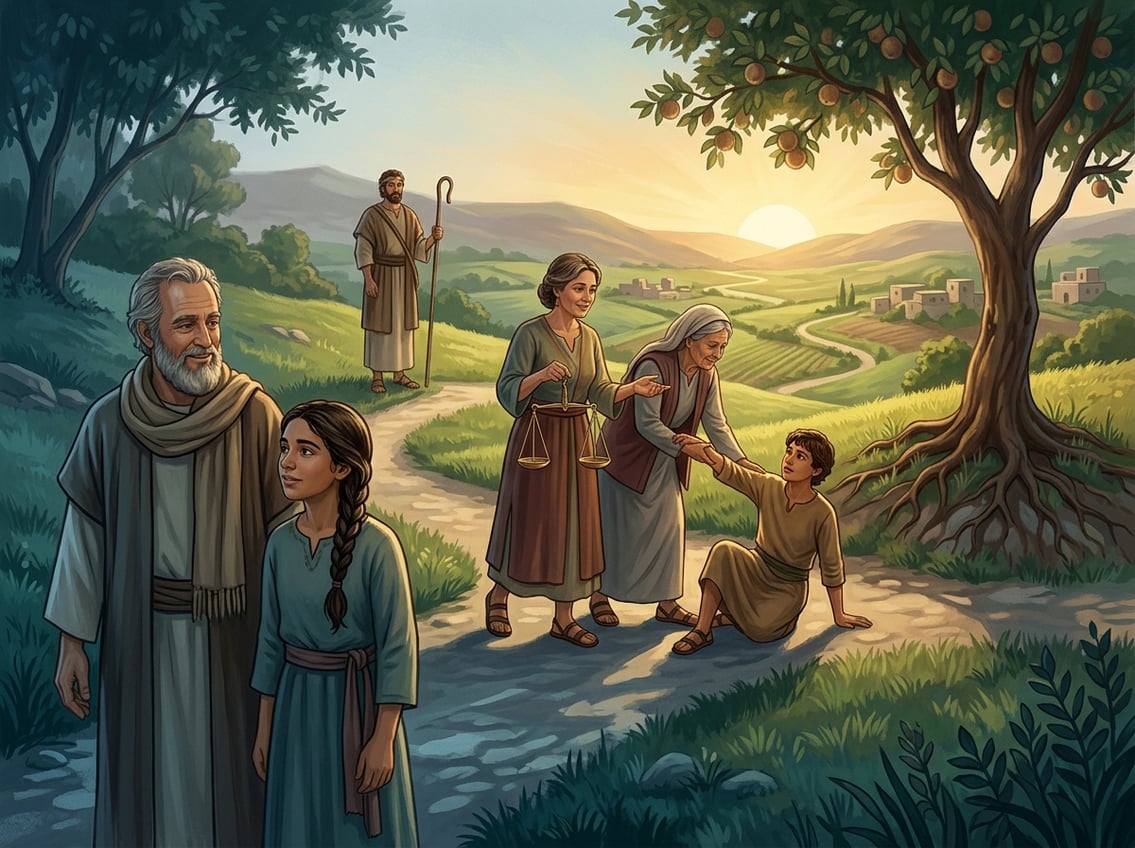
The Core Biblical Idea: Right With God
In the Bible, righteousness means being in right standing with God, not just following a list of rules. This idea shapes how scripture defines good deeds, integrity, and justice, and it stands in direct contrast to wickedness.
More Than Morality or Good Deeds
Biblical righteousness is not the same as general morality or good deeds. A person can act nicely and still miss the biblical meaning of being right with God.
Key distinctions:
| Common View | Biblical View |
|---|---|
| Righteousness = being a "good person" | Righteousness = right standing with God |
| Earned through good deeds | Received as a gift through faith |
| Measured by human opinion | Measured by God's standard |
The word for righteousness in Hebrew, tsedeq, and in Greek, dikaiosyne, both point to justice and uprightness, not just polite behavior, according to Bible Hub's overview of righteousness.
True righteousness comes from God, not from human effort alone, based on Gospel Mount's explanation of biblical righteousness.
Right Relationship, Integrity, and Justice
Being righteous means having a right relationship with God. This relationship shows up through honesty, integrity, and justice toward others.
What this looks like in practice:
- Integrity: Keeping promises and acting the same in private as in public
- Honesty: Speaking truth even when it costs something
- Justice: Treating people fairly, especially the poor or powerless
- Virtue: Choosing what is right over what is easy
This relational side connects righteousness to loyalty and faithfulness, not just rule-keeping, as shown in The Bible Seminary's study of Hebrew righteousness.
Righteous deeds, then, flow out of a right relationship with God. They are the result of that relationship, not the cause of it.
Righteousness Compared With Wickedness
Scripture often places righteousness and wickedness side by side to show the contrast clearly.
| Righteousness | Wickedness |
|---|---|
| Trusts and obeys God | Rejects God's authority |
| Acts with justice and honesty | Acts with deceit or harm |
| Leads to right standing with God | Leads to separation from God |
This contrast is a common Bible pattern used to teach right from wrong. God's own character sets the standard for righteousness, and human wickedness is measured against that same standard, according to GotQuestions.org's definition of righteousness.
Hebrew and Greek Words Behind Righteousness
The Bible uses specific Hebrew and Greek words to describe righteousness, and each word carries a distinct shade of meaning. Together, these terms show that righteousness is tied to God's character, fair treatment of others, and loyalty to a covenant relationship.
Tsedeq and Tsedaqah in the Old Testament
The Old Testament uses two main Hebrew words for righteousness: tsedeq and tsedaqah.
| Word | Basic Meaning | Focus |
|---|---|---|
| Tsedeq (צֶדֶק) | Rightness, justice | An objective standard set by God |
| Tsedaqah (צְדָקָה) | Righteous action | How that standard is lived out in daily life |
Tsedeq points to rightness that conforms to God's own standard, not just a personal moral code. Tsedaqah shows that righteousness is active, not passive. Ancient Hebrew thought treated righteousness as something a person does, not just believes. This is why the Old Testament often links righteousness to fair actions, honest business, and care for the poor.
Dikaios and Dikaiosyne in the New Testament
The New Testament shifts into Greek, using the words dikaios and dikaiosyne to carry forward the same core ideas.
- Dikaios: an adjective meaning righteous, just, or upright. It describes a person's character or God's own judgments as right and true.
- Dikaiosyne: a noun meaning righteousness or justice. It refers to equity and right standing before God.
These words connect closely to the Hebrew tsedeq and tsedaqah. In fact, the same Hebrew concepts of tsaddiq and tsedeq stand behind dikaiosyne throughout the New Testament. This link shows that New Testament writers were building on Old Testament ideas, not creating something new.
Covenant Faithfulness and Fair Judgment
Righteousness in the Bible is not just about following rules. It is tied to relationships, especially the covenant between God and His people.
Key points about this covenant connection:
- Righteousness describes meeting the claims of a relationship, not just personal moral effort.
- God is called righteous when He keeps the promises He made to Israel, such as rescuing His people and judging their enemies.
- In many Psalms and in the prophet Isaiah, God's righteousness and God's salvation become closely linked ideas.
- Righteousness also includes fair judgment, meaning God's decisions are just and consistent with His character.
This covenant focus explains why the phrase "the righteousness of God" often points to His faithful action, not just an abstract quality. It also shows why righteousness in Scripture usually involves both right belief and right relationship with God.
God's Standard and Human Need
The Bible teaches that God is perfectly holy, and He measures human behavior against His own perfect character. This standard is so high that no person can meet it through good works alone, which creates a deep need for mercy and grace.
God's Righteous Character
God's righteousness is not a rule He follows. It is who He is.
| Attribute | What It Means |
|---|---|
| Holiness | God is set apart from sin and impurity |
| Righteousness of God | He always acts in a way that is right |
| Justice | He treats every person fairly |
| Perfection | He is complete, with no flaw in word or action |
Because God's own perfection sets the standard for human righteousness, every human action, word, and thought is measured against His character. This is why the Bible describes righteousness as more than following rules. It is living in full agreement with God's nature.
What God's Law Reveals About Sin
God gave His law through Moses to show people how to live. This law also revealed a deeper problem: sin.
The Old Testament law worked like a mirror. It showed people:
- What God expects – clear commands for right living.
- Where people fail – actions and thoughts that break God's standard.
- **Why a solution
Faith, Justification, and the Righteousness of Christ
The Bible teaches that righteousness is not earned through works but received as a gift through faith. This section covers how faith leads to justification, how Christ's righteousness is given to believers, and how the cross and resurrection make peace with God possible.
Abraham's Faith Credited as Righteousness
Abraham's story shows how faith and righteousness connect in scripture.
| Verse | Text | Meaning |
|---|---|---|
| Genesis 15:6 | Abraham believed the Lord, and it was credited to him as righteousness | God counted Abraham's trust as righteousness, not his actions |
| Romans 4:5 | To the one who does not work but trusts God who justifies the ungodly, their faith is credited as righteousness | Paul uses Abraham as proof that faith, not works, brings righteousness |
Key points about Abraham's example:
- Abraham had no law to keep at that point in history.
- His righteousness came before any specific commandment or ritual.
- Paul builds his case for righteousness by faith directly from this account.
- This model applies to all believers, not just Abraham.
Righteousness Received Through Faith in Jesus Christ
Righteousness comes through faith in Jesus Christ, not through human effort.
| Verse | Text | Meaning |
|---|---|---|
| Romans 3:22 | This righteousness is given through faith in Jesus Christ to all who believe | Faith in Christ is the means by which righteousness is given |
| Romans 3:26 | God did this to demonstrate his righteousness...so as to be just and the one who justifies those who have faith in Jesus | God remains just while declaring believers righteous |
| 2 Corinthians 5:21 | God made him who had no sin to be sin for us, so that in him we might become the righteousness of God | Christ took on sin so believers could receive his righteousness |
This is called imputed righteousness—Christ's righteousness is credited to the believer's account. It is righteousness as a gift, not a reward for good behavior.
The righteousness of Christ replaces human failure. Believers stand before God clothed in Christ's righteousness, not their own.
The Cross, Resurrection, and Peace With God
The cross and resurrection complete the work of justification.
| Verse | Text | Meaning |
|---|---|---|
| Romans 4:25 | He was delivered over to death for our sins and was raised to life for our justification | Christ's death paid for sin; his resurrection confirms justification |
| Romans 5:1 | Since we have been justified through faith, we have peace with God through our Lord Jesus Christ | Justification results in peace with God |
Steps in the process of salvation through Christ:
- Jesus dies on the cross to pay for sin.
- God raises Jesus through the resurrection of Christ, proving the payment was accepted.
- Believers receive justification by faith, not by works.
- This justification produces peace with God instead of judgment.
This sequence shows that grace, not merit, is the basis for salvation. Christ's finished work secures the believer's standing before God.
Jesus' Teaching on Heart-Deep Righteousness
Jesus taught that true righteousness starts in the heart, not just in actions. He showed this through three main ideas: hungering for what is right, seeking God's kingdom first, and going deeper than outward rule-following.
Hunger and Thirst for Righteousness
In Matthew 5:6, Jesus said those who hunger and thirst for righteousness will be filled.
What this verse means:
| Part of Verse | Plain-English Meaning |
|---|---|
| "Hunger and thirst" | A strong, ongoing desire |
| "For righteousness" | Wanting to live in a way that pleases God |
| "Shall be filled" | God promises to satisfy this desire |
Key points about this teaching:
- Righteousness is not a burden. It is something people can deeply want.
- The desire itself is a sign of blessing, according to Jesus.
- This hunger points to humility. A person admits they do not already have full righteousness on their own.
- Christ links this desire to being "filled," meaning God provides what a person cannot earn alone.
Seeking the Kingdom of God First
Matthew 6:33 says to seek first the kingdom of God and his righteousness.
Quick breakdown:
- "Seek first" – put this above other priorities.
- "Kingdom of God" – God's rule and reign, also called the kingdom of heaven.
- "His righteousness" – living in right relationship with God.
- "All these things will be added" – other needs are met when this comes first.
This teaching connects obedience to God with trust. A person who seeks the kingdom first is choosing God's standards over worldly ones.
It also ties righteousness to mercy and love, since the kingdom of God includes how people treat others, not just personal belief.
Beyond the External Righteousness of the Pharisees
In Matthew 5:20, Jesus said a person's righteousness must exceed that of the scribes and Pharisees to enter the kingdom of heaven.
Why the Pharisees fell short:
- They followed rules closely but often missed the heart behind them.
- Matthew 23:28 says they looked righteous on the outside but were full of hypocrisy and lawlessness inside.
- Their righteousness relied on self-effort, not on faith.
Contrast table:
| Pharisees' Approach | Jesus' Teaching |
|---|---|
| Focused on outward acts | Focused on the heart |
| Based on self-righteousness | Based on faith and grace |
| Rigid rule-keeping | Genuine love and mercy |
Jesus was not asking people to try harder at rule-keeping. He was pointing to a righteousness that comes through relationship with God, not through appearances.
Living Righteously Through the Holy Spirit
The Holy Spirit gives believers a new heart and a new nature, making righteousness in the Holy Spirit possible rather than something earned through willpower alone. This inward change shapes obedience, justice, and hope in the daily life of Christians.
Obedience That Flows From Grace
Obedience to God is not a way to earn salvation. It is the natural result of the new nature the Spirit gives.
| Verse | What It Teaches |
|---|---|
| Romans 8:4 | The Spirit enables believers to meet the righteous standard of God's law |
| 1 Peter 2:24 | Christ's death frees people from sin so they can live for righteousness |
| Deuteronomy 6:25 | Following God's commands is credited as righteousness |
This obedience is described in living righteously as a fruit of grace, not a condition for it. The gospel gives believers a new heart first,
Frequently Asked Questions
These questions cover the core meaning of righteousness, how it applies to believers, and how the concept appears across both testaments.
What does righteousness mean according to the Bible?
Righteousness means meeting God's standard of what is right, true, and just.
| Aspect | Description | Reference |
|---|---|---|
| Standard | God's own character and perfection | Deuteronomy 32:4 |
| Legal status | Being declared right before God | Romans 3:22 |
| Lived-out result | Actions that reflect God's will | Deuteronomy 6:25 |
The concept blends God's character with human moral conduct, since His law both describes who He is and sets the measure for human behavior.
What makes a person righteous in God's eyes?
A person is made righteous through faith, not personal effort.
- Old Testament pattern: Trust in God, shown through obedience (Habakkuk 2:4)
- New Testament pattern: Faith in Christ credited as righteousness (Romans 3:24)
- Human limitation: No one meets God's standard alone (Romans 3:10, 23)
- Result: Believers are legally declared righteous, even before their behavior fully changes
Righteousness is described as a gift received through faith, not something earned by works.
What are the characteristics of a righteous person in the Bible?
| Characteristic | Verse |
|---|---|
| Loves God's commands | Psalm 119:97 |
| Seeks justice | Micah 6:8 |
| Trusts in God's deliverance | Psalm 34:17 |
| Walks with integrity | Proverbs 11:5 |
| Avoids the path of the wicked | Psalm 1:6 |
These traits show up consistently across the Psalms and Proverbs, where righteous living is tied to daily trust and obedience.
What are examples of righteousness in the Bible?
- Noah — called righteous and blameless among his generation (Genesis 6:9)
- Abraham — credited righteousness because he believed God (Genesis 15:6)
- The coming King — will judge with righteousness and fairness (Isaiah 11:4)
- Jesus Christ — lived a sinless life, becoming the source of righteousness for others (2 Corinthians 5:21)
What is the Hebrew and Greek meaning of righteousness?
| Language | Term | Core Meaning |
|---|---|---|
| Hebrew | tsedeq / tsedaqah | Rightness, justice, conformity to God's will |
| Greek | dikaiosyne | Right standing, justice, moral correctness |
Both terms point to the same idea: meeting a standard of rightness rather than simply avoiding wrongdoing.