What Is Adultery in the Bible? A Memory Science Guide
The Bible allows divorce in cases of adultery but does not require it, and reconciliation is possible.
Posted by
 Eden
EdenRelated reading
Are Dinosaurs Mentioned in the Bible? A Retention Guide
The Bible does not explain how these creatures came to an end.
How Did Samuel Die in the Bible? Memory Science Guide
Samuel was buried at his own house in Ramah, the town connected to most of his life and work, according to the account of his death and burial in 1 Samuel 25.
How Did Saul Die in the Bible? Scripture Memory Method
The death of King Saul marks the end of Israel's first monarchy in the Old Testament.
TL;DR
- The Bible defines adultery as voluntary sexual relations between a married person and someone other than their spouse.
- Adultery breaks the marriage covenant and is treated as a serious sin against God, not just a private matter.
- Jesus taught that adultery can happen in the heart through lust, not only through physical acts.
- The Ten Commandments name adultery as a direct violation of God's law for married couples.
- The Bible allows divorce in cases of adultery but does not require it, and reconciliation is possible.
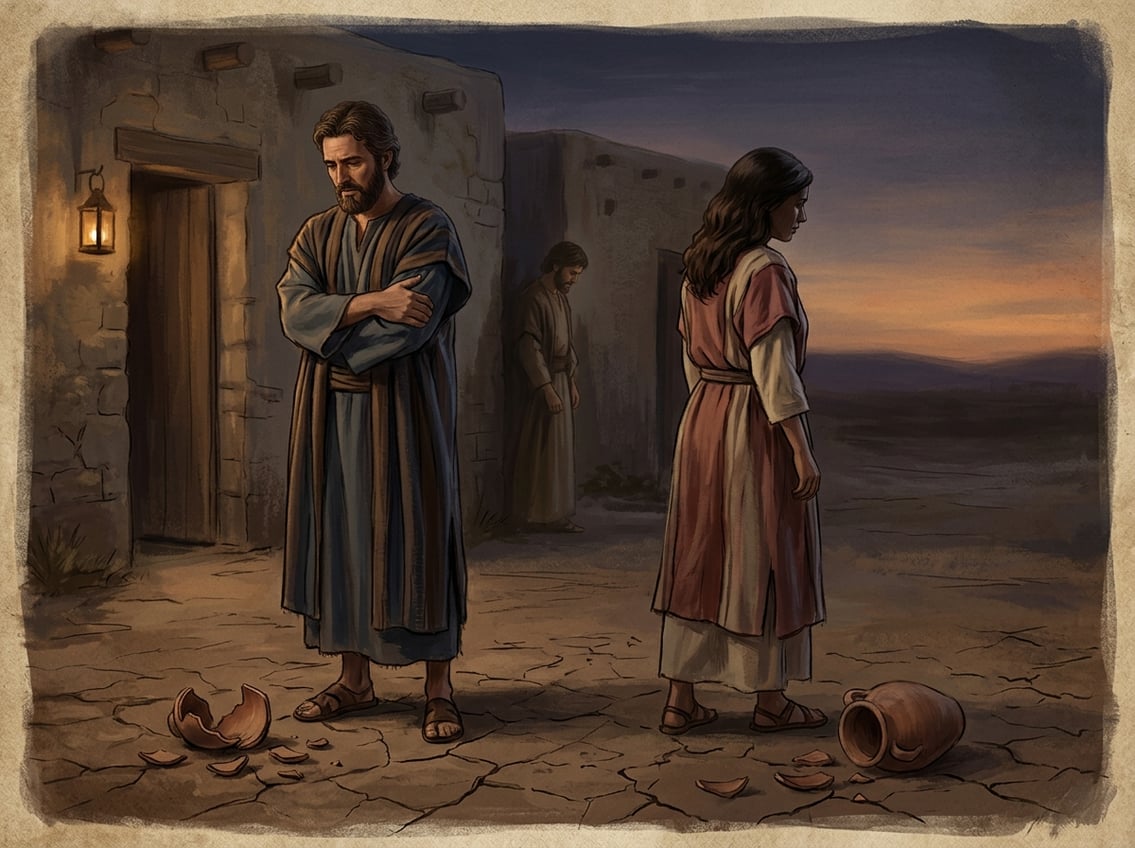
Biblical Definition and the Marriage Covenant
The Bible ties adultery directly to the marriage covenant between a husband and wife. It treats faithfulness, trust, and commitment as core parts of that bond, not optional extras.
Adultery, Infidelity, and Unfaithfulness
The biblical definition of adultery centers on a married person having sexual relations with someone who is not their spouse.
| Term | Meaning in Scripture |
|---|---|
| Adultery | Sexual relations between a married person and someone other than their spouse |
| Infidelity | Breaking trust or loyalty within the marriage bond |
| Unfaithfulness | Failing to keep the promises made in the marriage covenant |
| Fidelity | Staying loyal and true to one's spouse |
Key points:
- The Old Testament lists adultery as a violation of the marriage covenant.
- Jesus later expanded the idea to include lustful thoughts, not just physical acts.
- The terms adulterer and adulteress apply to the man or woman who breaks this trust.
Adultery Compared With Fornication and Sexual Immorality
Scripture uses different words for different types of sexual sin, and the distinction between adultery and fornication depends on marital status.
| Sin | Who Is Involved | Marital Status |
|---|---|---|
| Adultery | Married person and another partner | At least one person is married |
| Fornication | Two unmarried people | Both people are unmarried |
| Sexual Immorality | Broad term for sexual sin | Covers adultery, fornication, and other acts |
This distinction matters for readers who want to understand specific Bible passages.
- Fornication involves people who are not married to each other or anyone else.
- Sexual immorality is a wider category that includes adultery and fornication.
- All three break God's design for sex within marriage.
One Flesh and Exclusive Fidelity
Genesis 2:24 states that a husband and wife become "one flesh," which forms the foundation for the marriage covenant and exclusive fidelity the Bible describes.
Marriage joins two people into a single, committed union. This union is meant to be exclusive, lasting, and protected by trust.
Core ideas:
- One flesh means the couple becomes united in a way that mirrors deep commitment.
- Exclusive fidelity means no outside sexual partners are all
The Seventh Commandment in the Old Testament
The seventh commandment sets a clear boundary for sexual conduct within the community of Israel. It carries a specific legal penalty and appears in narrative form in the story of David, Bathsheba, and Uriah.
Exodus 20:14 and the Ten Commandments
Text: "You shall not commit adultery" (Exodus 20:14)
| Detail | Information |
|---|---|
| Location | Ten Commandments, given to Moses |
| Original language | Hebrew, two words: lo tin'aph |
| Placement | Sixth or seventh command, depending on tradition |
| Repeated in | Deuteronomy 5:18 |
| Core meaning | Do not have sex with someone married to another person |
Key facts:
- The command protects the marriage bond between a person and their spouse.
- It directly forbids sex with a neighbor's wife.
- Jewish and most Protestant traditions count it as the seventh commandment. Catholic and Lutheran traditions count it as the sixth.
Mosaic Law and the Penalty for Covenant Breaking
Mosaic Law treated adultery as a serious crime against the community, not just a personal failure.
Legal texts:
| Reference | What it states |
|---|---|
| Leviticus 20:10 | Both the man and woman who commit adultery shall be put to death |
| Deuteronomy 22:22 | Confirms the death penalty when a man sleeps with another man's wife |
| Proverbs 6:32 | Adultery destroys the man who does it; he lacks sense |
Points to know:
- The punishment applied to both parties, not just the woman.
- Historical records do not confirm how often this penalty was actually carried out.
- Polygamy existed in Israelite society, but the law still protected each wife's exclusive claim within her own marriage.
- The severity of the penalty shows how much value the law placed on marriage.
David, Bathsheba, and Uriah
The clearest Old Testament example of adultery and its consequences is found in the story of David and Bathsheba.
Timeline of events:
- David sees Bathsheba, the wife of Uriah, and sends for her.
- David sleeps with Bathsheba while Uriah is away at war.
- Bathsheba becomes pregnant.
- David arranges for Uriah to be killed in battle to hide the affair.
- The prophet Nathan confronts David (2 Samuel 12).
- David admits his sin against God.
Related texts:
| Reference | Connection |
|---|---|
| 2 Samuel 11-12 | Full account of the affair and its aftermath |
| Psalm 51 | David's prayer of confession after Nathan's confrontation |
| Proverbs 6 | General warning against adultery and its costs |
David's response in Psalm 51 shows that he understood his sin as a violation against God, not just against Uriah or Bathsheba. This matches the pattern set by the seventh commandment: adultery breaks a covenant that God himself set in place.
Jesus’ Teaching on Lust and Heart Intentions
Jesus Christ redefined adultery in the New Testament to include thoughts, not just actions. His teaching connects lust, temptation, and the flesh to the deeper matter of the heart.
Matthew 5:27–28 and Adultery of the Heart
Matthew 5:27-28 states:
| Verse | Text |
|---|---|
| Matthew 5:27 | "You have heard that it was said, 'You shall not commit adultery.'" |
| Matthew 5:28 | "But I say to you that everyone who looks at a woman with lustful intent has already committed adultery with her in his heart." |
Key points from Matthew 5:28:
- Jesus applies the seventh commandment to inner thoughts, not just physical acts.
- Lustful intent counts as adultery of the heart, even without touch.
- The teaching raises the moral standard beyond outward compliance.
- This shift shows that righteousness starts inside a person, not just in behavior.
Lustful Thoughts, Covetousness, and Temptation
Lust and covetousness share a root: both involve wanting something a person has no right to have.
Cross-reference comparison:
| Passage | Teaching |
|---|---|
| Proverbs 6 | Warns against the adulterous woman and the destruction that follows lust |
| Matthew 5:27–28 | Names lustful looking as adultery in the heart |
| 1 Corinthians 6:18 | Commands believers to "flee from sexual immorality" |
Temptation follows a pattern:
- A thought enters the mind.
- The flesh responds with desire.
- The person either dwells on it or rejects it.
- Dwelling on it leads to sin; rejecting it stops the cycle.
The flesh is not neutral. Left unchecked, it pulls toward sin. This is why Jesus addressed the thought life directly, not just outward acts.
Purity and Self-Control in Daily Life
Purity is a daily discipline, not a one-time decision.
Practical steps for self-control:
- Identify triggers that lead to lustful thoughts.
- Redirect attention immediately when a thought arises.
- Rely on the Holy Spirit for strength, not willpower alone.
- Review Scripture passages on holiness as a regular habit.
Quick reference: holiness vs. compromise
| Choice | Result |
|---|---|
| Guarding the mind | Growth in holiness |
| Entertaining lustful thoughts | Spiritual compromise |
| Fleeing temptation (1 Corinthians 6:18) | Protection from sin |
| Ignoring warning signs | Increased vulnerability |
Self-control is not automatic. It requires ongoing effort tied to intentional choices about what a person allows into their mind.
Divorce, Remarriage, and Marital Faithfulness
The Bible treats marriage as a covenant meant to last for life, and it addresses divorce and remarriage directly through the words of Jesus and the letters of Paul. Key passages show both the seriousness God places on marital faithfulness and the debate among believers about when remarriage is permitted.
Jesus on Divorce and Remarriage
Jesus spoke about divorce and remarriage in several Gospel passages. Each one ties remarriage after divorce to the concept of adultery.
| Passage | Core Teaching |
|---|---|
| Matthew 5:31-32 | Divorcing a wife, except for sexual immorality, causes her to commit adultery |
| Matthew 19:9 | Remarriage after divorce is adultery, unless the divorce was due to sexual immorality |
| Mark 10:11-12 | Divorcing a spouse and remarrying is called adultery, with no exception listed |
| Luke 16:18 | Divorce followed by remarriage is labeled adultery for both parties involved |
| Mark 10:7-9 | Cites Genesis to affirm that husband and wife become "one flesh" and should not be separated |
Matthew's Gospel includes an exception for sexual immorality, but Mark and
Spiritual Adultery and Covenant Unfaithfulness
Spiritual adultery describes Israel and Judah's unfaithfulness to God, most often through idolatry. The prophets used marriage imagery to show how worship of other gods breaks the covenant bond, while Hosea's story shows how God responds with redemption and love.
Idolatry as Betrayal of God
Idolatry is treated as spiritual adultery because it breaks a covenant that God compares to marriage. When Israel worshipped other gods, the Bible describes this as a betrayal similar to a spouse cheating on their partner.
Key verses on idolatry as betrayal:
| Verse | Plain-English Meaning |
|---|---|
| Jeremiah 3:8 | God gave Israel a certificate of divorce because of her adultery with idols |
| Ezekiel 16:32 | Compares Israel to an adulterous wife who prefers strangers over her husband |
| Revelation 2:22 | Warns the apostate church about judgment for spiritual unfaithfulness |
This pattern shows a clear link: idolatry equals unfaithfulness, and unfaithfulness breaks covenant faithfulness.
Israel and Judah in the Prophets
The prophets Jeremiah and Ezekiel used direct language to describe the unfaithfulness of God's people as spiritual adultery.
Comparison of prophetic accusations:
| Prophet | Reference | Accusation |
|---|---|---|
| Jeremiah | Jeremiah 3 | Israel and Judah both act like unfaithful wives who chase after other lovers (idols) |
| Ezekiel | Ezekiel 16 | Jerusalem is pictured as a wife who forgets her husband and sells herself to foreign nations and gods |
Both prophets use the same core idea: breaking covenant with God is the same as breaking a marriage vow.
This repeated theme across different prophets confirms it was not a one-time metaphor but a consistent way to describe Israel's covenant-breaking unfaithfulness.
Hosea's Picture of Restoring Love
Hosea's story adds a redemptive layer to the theme of spiritual adultery. God tells Hosea to marry an unfaithful woman as a living picture of His relationship with Israel.
Key elements of Hosea's account:
- Hosea 3:1 — God tells Hosea to love his wife again, even though she is an adulteress, just as God loves Israel despite her turning to other gods.
- The marriage itself becomes a symbol of God's steady love toward an unfaithful people.
- Restoration, not just punishment, is the final message of the story.
This account shows that spiritual adultery does not end the relationship. Instead, it sets up a pattern of betrayal followed by redemption, showing that God's love pursues His people even after infidelity.
Consequences, Repentance, and Forgiveness
The Bible presents adultery as an act with real relational, spiritual, and social consequences, while also offering a clear path toward forgiveness and restoration. Scripture pairs warnings about the damage adultery causes with promises of grace for those who repent.
Relational and Spiritual Consequences
| Reference | Consequence Described |
|---|---|
| Proverbs 6:32 | A man who commits adultery "lacks judgment" and destroys himself |
| Proverbs 6 (broader passage) | Warns that adultery leads to shame, loss of reputation, and lasting damage |
| Hebrews 13:4 | God will judge those who defile the marriage bed |
| 1 Corinthians 6:18 | Sexual sin is described as a sin against one's own body |
| 1 Corinthians 6:9-10 | Lists adultery among sins that can exclude a person from inheriting the kingdom of God |
| 1 Corinthians 6:9–11 | Follows the warning with hope: some believers were once guilty of these sins but were washed, sanctified, and justified |
Adultery breaks trust between spouses and within the family unit.
It also damages a person's standing with God, since marriage is treated as a sacred covenant tied to God's covenantal love.
Key consequences include:
- Loss of trust between spouses
- Damage to family stability
- Spiritual separation from God
- Public shame or legal penalty under Old Testament law
The Woman Caught in Adultery
John 8:1-11 records one of the clearest examples of Jesus Christ addressing adultery directly.
| Verse | Event |
|---|---|
| John 8:3-6 | Religious leaders |
Frequently Asked Questions
Adultery in the Bible covers Jesus's teaching on sexual sin, the exact acts that count as adultery, and how the Bible tells fornication apart from adultery. It also covers what happens after adultery and specific people in the Bible who committed it.
How did Jesus define adultery?
Jesus expanded the definition of adultery beyond physical acts. He said that looking at someone with lust already counts as adultery in the heart.
| Verse | Reference | Meaning |
|---|---|---|
| "Anyone who looks at a woman lustfully has already committed adultery with her in his heart." | Matthew 5:27-28 | Lustful thoughts count as adultery, not just physical acts |
| "Whoever divorces his wife and marries another commits adultery against her." | Mark 10:11-12 | A married man having sex with anyone but his wife is adultery |
| "Anyone who divorces his wife and marries another woman commits adultery." | Luke 16:18 | Confirms the same standard applies to men, not just women |
Before Jesus, Old Testament law defined adultery mainly as sex between a married woman and a man who was not her husband. Jesus made the rule apply equally to married men.